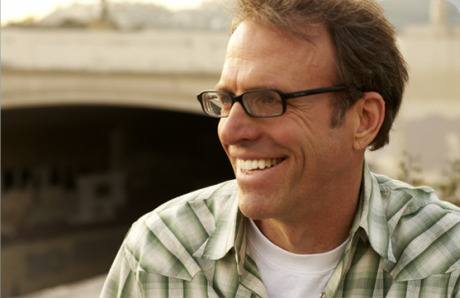
Kirby Dick likes making movies about secrets. In his last documentary, This Film is Not Yet Rated, the director went on a quest to determine the identities of the MPAA ratings board, a secret the Motion Picture Association guards closely. In the process, he provided a shrewd examination of the unfair practices of that committee, and, more generally, of American attitudes towards sex, violence, drug use, and language in our entertainment. His latest film, Outrage similarly attempts to cast light on people seeking to remain in the dark, in this case the dark of the closet.
While the practices of the film ratings board are certainly important — their decisions can equal de facto censorship if they issue a rating that will cause most exhibitors to drop a film — the stakes are certainly higher when talking about elected officials who have committed themselves to making certain Americans into second-class citizens based solely on their sexual orientation. And when those leaders are hiding the fact that they themselves share that orientation, it’s a special brand of hypocrisy that deserves to be exposed. So Dick drops the more confrontational Michael Moore-ish feel of his last film in favor of a straighter (no pun intended) approach this time around. It makes for an effective, and deeply affecting, look at the costs and the damages of the closet in American politics. Kirby Dick spoke with DCist about his film — which opens today at E Street — the day after a well-received preview screening last week. (And don’t miss our post on NewsChannel 8’s Doug McKelway losing his shit over this movie).
How did the idea to do this film come to you?
I was in Washington, D.C., it was August of 2006, and I was promoting my last film, This Film Is Not Yet Rated, about the censorship of the American film ratings process, and I realized I only knew that story because I was in the film business. And I thought, here I am in Washington, there must be quite a few stories that people only know if they’re in politics, inside the Beltway; I started asking around, and very quickly started hearing about, to my surprise — and I think to the surprise of most Americans — that there were many closeted gay politicians. But what struck me as particularly significant was that a number of them were hypocrites: they were voting anti-gay, as well. And that’s when I thought to myself, this could be a very fascinating documentary. In particular, the other component of this, which I also was told about, was the psychology of these people, of someone who would, in exchange for a political career, would choose to live a double life for decades, and the the tragedy of that. I mean, I think these characters are, in certain instances, almost Shakespearean. So it made for very rich subject matter, both personally and politically.
Once you decided on that, how easy was it to get into development, and to get people to talk on such a taboo subject?
It was not easy. Washington already is a very buttoned-down town, people are very careful with what they say. And on this particular subject it was a real challenge. I mean, there were certain people who came forward early on, and that was very helpful. But it took a lot of time and a lot of work on the part of my producer, Amy Ziering, to cultivate relationships, and initially just convince them that it was not a tabloid film, but then to discuss the advantages of having this film made. In the end, everyone who participated, I think, is aware of the importance of this film being made, because most of the people I talk to in the film know the costs of the closet. On a personal level, they’ve either been in the closet, or have known many people who are in the closet, they see the difficulty of that. On a political level, they’ve known people who, to protect their closet, have chosen to vote anti-gay where they otherwise wouldn’t. And I think they felt that if a film was made about this subject, the closet — which sort of exists because light is not shed on it — would diminish in American politics.