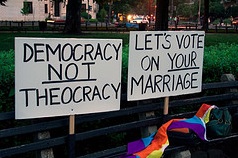
 Photo by Fredo Alvarez
The D.C. Board of Elections and Ethics ruled today that a District-wide referendum on whether or not the city should recognize same sex marriages performed elsewhere is not allowed, City Desk is reporting. The decision appears to have been based on whether or not such a referendum would violate the Human Rights Act by permitting discrimination based on sexual orientation. “Because the Referendum would authorize discrimination prohibited by the HRA, it is not a proper subject for referendum, and may not be accepted by the Board,” is the quote from the ruling.
The decision is a victory for same sex marriage advocates, and a blow to the opposition movement being led by area black religious leaders.
The D.C. Council voted 12-1 in May in favor of recognizing same sex marriages performed elsewhere. The success of this legislation has largely been viewed as a test run on whether the Council will take up another bill later this year legalizing gay marriages performed in the District.
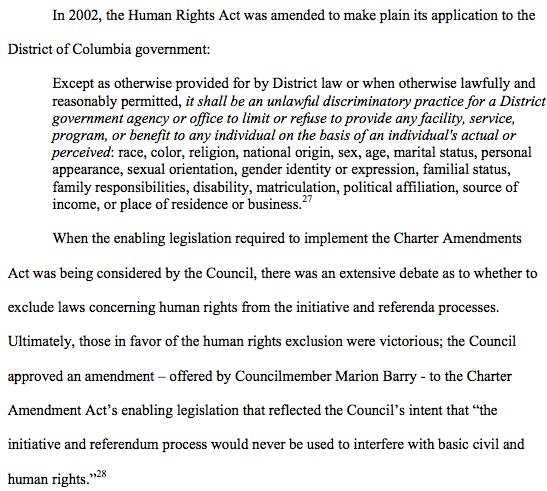
More: The BOEE has posted its decision, which you can download in PDF format, here. We’ve pasted the key passage below; note the inclusion of Ward 8 Council member Marion Barry’s history with this section of the Human Rights Act. Barry was the only Council member to vote against the legislation in May.
The Washington Blade has more, including a reaction quote from gay At-large D.C. Council member David Catania, who has said that he plans to introduce a same sex marriage bill this year.
And here’s the quote from At-large Council member Phil Mendelson, who introduced the marriage recognition bill: “I completely agree with today’s decision of the Board of Elections and Ethics. As I and many others stated when we testified in front of the Board last week, civil rights should not be subject to a referendum. I applaud this decision, as it was based firmly in the tradition of the District’s own progressive Human Rights Act. Recognizing marriages lawfully entered into in other jurisdictions is logical and just. It is unacceptable for government to sanction discrimination on the basis of one’s sexual orientation.”