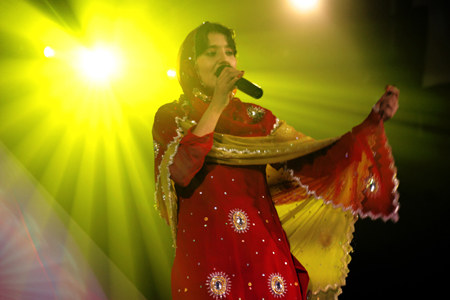
 A cynic might be a little saddened that the newfound freedoms of the Afghan people are manifesting themselves in their adoption of a segment of our pop culture as disposable as American Idol. But Afghan Star, the documentary about the analogous Afghan television show of the same name, shows that in a different context, that show’s format can be seen as evidence of a people’s liberation.
Under Taliban rule, the people of Afghanistan had no music at all. It was forbidden by law, and anyone playing music, possessing musical instruments, playing or possessing pre-recorded music, or even singing anything other than religious chants was subject to harsh punishment. Knowing that all music was a black market underground commodity, it’s easy to see why something as simple as a television show devoted to not only broadcasting music, but encouraging people around the country to participate in music, is potentially inspirational.
Afghan Star concentrates on four of the show’s contestants, two women and two men, as they compete week after week for the title. The format is similar to what Americans are used to, with an all-smiles host introducing performances by the contestants each week amid bright lights and enthusiastic audiences. Those at home vote for their favorites via text message. All that’s missing is snarky judges’ commentary. But there are elements added here: in a country where democracy is new, everyone wants to be running for something; hence, during the time between broadcasts, the contestants and their “campaigns” pass out fliers, post posters, and do meet and greets in any location people will shake their hands. One producer tells how a fan sells his car for $6,000 to help with the campaign while another purchases 10,000 mobile phone SIM cards in order to pad the ballot box for his favorite singer.