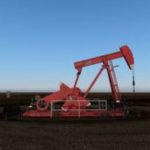
Edward Burtynsky, “SOCAR Oil Fields #3, Baku, Azerbaijan, 2006,” Chromogenic color print. Copyright the artist, courtesy Nicholas Metiveir Gallery, Toronto and Corcoran Gallery of Art.
“How do you photograph something you can’t see?,” was the question Edward Burtynsky faced when creating the images in Oil, on view at the Corcoran Gallery of Art starting tomorrow. The world-renowned photographer began his career focused on consumerism and consumption, but around 15 years ago he had his “oil epiphany” – that oil is at the center of everything in an industrialized world and yet, we never see it, only its end products. The resulting portfolio of work is not a heavy-handed political statement, but a gorgeous documentary on the uses and ugliness of oil. I first discovered Burtynsky’s work in the (must-see) 2006 documentary Manufactured Landscapes and, admittedly, have eagerly been looking forward to seeing his work in person. It did not even remotely disappoint.
Burtynsky’s large-scale, sweeping landscape photographs deftly allow us to “see” oil, both in each powerful individual scene, and together in a longer narrative, which is how the Corcoran has set up his exhibit. In the first gallery, oil fields in California and Houston and refineries in New Brunswick set the scene. In mostly aerial shots, oil rigs dot an otherwise barren landscape fading all the way into remarkable horizons, marking the beginning of the “lifecycle.” A Texan near me at the press preview exclaimed, “In my district they’d never be that close together!” Is that better, then, if the same number of rigs take up even more space? (Would it make as interesting a picture?) The refineries are highly organized labyrinths of green and silver pipes that look like fine jewelry.