Martin Austermuhle
 You may eventually be able to get medical marijuana more places throughout the District, but you still won’t be able to get a lot of it.
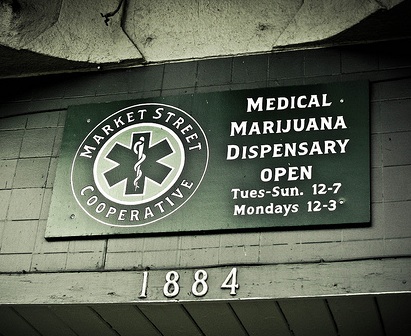
A revised version of legislation legalizing the use of medical marijuana made public today loosens a cap on the number of dispensaries allowed and where they can be located, but otherwise creates a relatively restricted system for qualified patients to get their weed. Under the revised legislation, five dispensaries will be allowed to start, but the mayor will be able to authorize up to three more. Additionally, the dispensaries will only need to be 300 feet away from schools or youth centers, significantly less than the 1,000 feet originally contemplated.
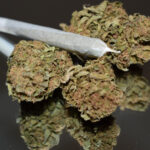
The legislation, which has now been approved by the D.C. Council’s Committee on Health and Committee on Public Safety and the Judiciary, also limits the amount of marijuana a patient can get to two ounces a month — enough for a joint or two a day, we’re told — though the mayor is allowed to increase that to 2.5 ounces. And unlike an earlier version of the legislation, patients will not be able to grow their own marijuana at home, though that may change by 2012. Patients will instead have to depend on dispensaries, which in turn will depend on cultivation centers that can possess up to 95 plants at a time.
A report from the Committee on Health makes clear that it seeks to establish a restrictive regulatory system for medical marijuana, citing New York and Rhode Island as examples to follow and California and Colorado as ones to avoid.
Safe Access D.C., a medical marijuana advocacy group, has already fired off a memo proposing that some of the restrictions be amended, including the two-ounce limit (they want eight ounces a month), the prohibition on home growing and the requirement that the recommending physician be licensed in the District (they want to expand it to Maryland and Virginia). They also want language removed that would allow dispensaries to be run by for-profit corporations, noting that only Colorado has such a system.
Interestingly, city officials don’t expect the program to be very big once it kicks off, likely after the council votes on the legislation in May. According to a Fiscal Impact Statement from District CFO Natwar Gandhi, it’s estimated that only 300 patients a year will qualify for medical marijuana, and they’re likely to pay between $25 and $150 in fees to register at local dispensaries. And if you’re thinking of running a dispensary or cultivation center, it’ll cost $5,000 to apply and $15,000 in annual registration fees. Over the next four years, the District stands to make only about $200,000 from the system, according to Gandhi.