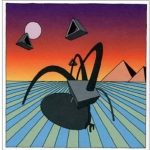
DCist’s Secret History series kicked off last summer with an entry on the Dismemberment Plan’s classic Emergency & I (DeSoto, 1999), one of the best albums to come out of D.C. in the 90s, if not ever. But given that the original piece featured no comments from the band — now a Secret History staple — and that the D-Plan just announced reunion shows for 2011 and a forthcoming Emergency & I reissue from Barsuk Records, we thought it might be a good time to re-post the Emergency & I piece, augmented with some observations and comments from Dismemberment Plan singer/guitarist Travis Morrison and bassist Eric Axelson. Enjoy!
“We’re the Dismemberment Plan, and we’re from Washington, D.C.”
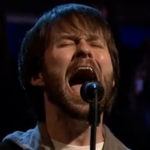
With these words, Travis Morrison, the Dismemberment Plan’s singer, guitarist, and perennial D.C. cheerleader, introduced kids in clubs all over the country (and the world — they toured Japan and Europe, too) to his band’s frenetic brand of sharp-edged, beat-heavy indie rock. Winning the hearts of thousands while at the same time serving as global ambassadors for the District scene, the D-Plan spread this city’s sound and rep far and wide, promoting their hometown with an enthusiasm born of genuine affection.
Over the better part of a decade, beginning with 1994’s Can We Be Mature? and ending with 2001’s Change, Morrison and company (Jason Caddell on guitar, Eric Axelson on bass and Joe Easley on drums) produced album after album of top-drawer noise, combining a rhythmic sensibility informed by reggae, R&B, hip-hop, synthpop, techno, and D.C.’s native Go-Go with aggressive melodicism, prickly punk-funk, emo introspection, art-damaged paranoia, and (critically) a sly sense of humor.
1990s D.C. was an extremely fertile musical environment, an ideal breeding ground for the D-Plan’s scattershot, experimental pop approach. “It was great,” says Morrison. “There were so many great bands that we could look up to, like Jawbox, Hoover, Shudder to Think, Fugazi, Nation of Ulysses, Edsel and Unrest, and semi-D.C. ‘satellite’ bands like Bikini Kill and Girls Against Boys. It seems almost hard to believe now, how many inspiring bands there were.”
“In the 90s, we hadn’t quite found our place in the D.C. music world yet,” says Axelson. “There were a ton of bands that we loved, but I think our weird brand of music didn’t really settle in until late 1999, when Emergency & I came out. Before that, we had a core of folks that came to shows, but it felt like we were generally viewed as an oddity of sorts with overdriven keyboards and trombones and whatnot.”