 Photo by sally henny penny.
Neighborhood blog JDLand reported last week that ANC 6D voted to support a proposal by the Capitol Riverfront Business Improvement District to add more words to the Navy Yard Metrorail station name. The BID is angling to alter the title to some kind of combination of “Capitol Riverfront / Ballpark / Navy Yard” — while the ANC also voted in support of adding “Arena Stage” to the Waterfront/SEU station name.
We’re not begrudging the mission of the BID, whose job is to let people know what’s in the area. But is there really anyone in D.C. that doesn’t know by now — or, if they’re from out of town, cannot just consult a map to discover — that Nationals Park is located at Navy Yard?
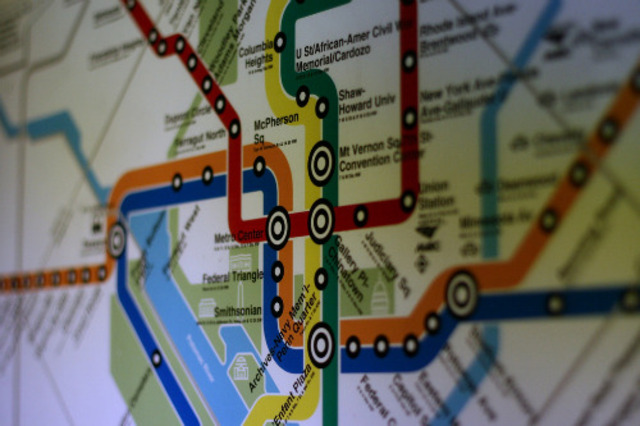
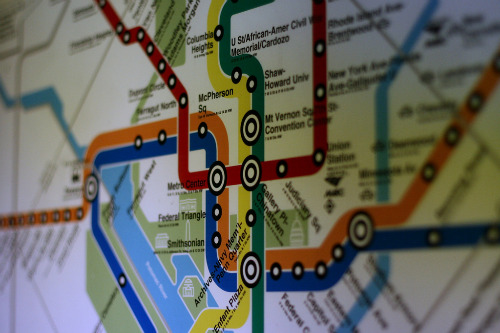
This isn’t a new debate. Metro station names have gotten somewhat out of hand over the last 15 years, especially on the Green Line. (Excuse me while I hop on at U Street / Cardozo / African-American Civil War Memorial, roll through Mount Vernon Square-7th Street / Convention Center, and then exit at Archives / Navy Memorial / Penn Quarter.) It’s station name creep, plain and simple, and especially galling when you think about how, at the genesis of the Metrorail system, station names had a limit of 15 characters. The Great Society Subway tells us that Metro’s original planners were told to keep the station names to two words at the most. Compare that guidelines to the 52 characters in the U Street station name, and you can see how far Metro’s naming conventions have drifted off course. Matt Johnson has produced this excellent graph, analysis and map which outlines nicely the argument that WMATA would be served just as well with truncated station names.
The District should take solace in the fact that there are so many nice, shiny things
popping up along the Green Line that bear boasting about. But does extending the name of these stations actually improve service, or just confuse people? Like mom always said: keep it simple, stupid.