

DCist’s highly subjective and hardly comprehensive guide to the most interesting movies playing around town in the coming week.
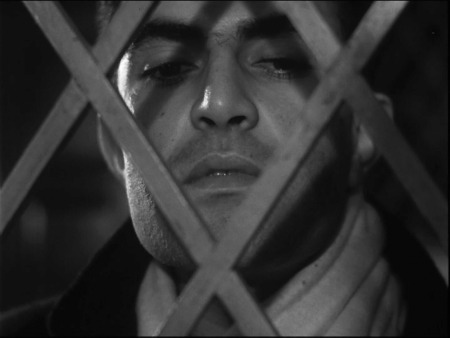 A still from Polanski’s ‘Teeth Smile’.
Polanski and the Łódź Film School
As a young man, Roman Polanski got his education in film at the prestigious National Film School in Łódź, Poland, which also turned out some of the greatest directors of Poland’s own 1960s cinema renaissance (Andrej Wajda and Krzysztof Kieślowski among them). Polanski, of course, went in a slightly different direction than most of his compatriots. He made but one film in Poland, his spectacular 1962 debut, Knife in the Water, which immediately garnered him international recognition. From there, it was on to the U.K. for a trio of films before Hollywood came calling.
But while he was at Łódź, Polanski made a number of short films, many of which would serve as early examples of the same sort of material that the director would carry with him for the next half century of filmmaking: the frank depictions of disturbing themes, the surreal flourishes and the use of sometimes absurd humor to defray all that psychological gut-wrenching. These films are currently in the midst of a world tour, accompanied by Polish musical duo Sza/Za, who are providing live musical accompaniment to the films, most of which are silent.
View an excerpt from Two Men and a Wardrobe, Polanski’s graduation film from Łódź.
Saturday at 4:30 p.m. at the National Gallery of Art. Free.
—
Quick civics test: the President and the Speaker of the House die in an accident, and the Vice President declines the office because he thinks he’s too old and frail. Who’s next in line? That would be the President pro tempore of the Senate — and in this movie, that’s James Earl Jones as Senator Douglass Dilman, who becomes the country’s first black president. (If the scenario were to occur in real life today, we’d get our first Asian-American commander-in-chief in Hawaii Senator Daniel Inouye.) Black presidents have been a television and movie staple for years, hopeful looks forward to the day that was realized in January 2009. But in 1972, a black president was just as unheard of in entertainment as it would have seemed to most of America in reality. The story was adapted from a 1964 Irving Wallace novel by Rod Serling, who had for years been getting America used to seeing socially progressive ideas in the guise of science fiction on The Twilight Zone. The movie was initially made for television itself, which may explain why many of the tougher aspects of Wallace’s book were softened, and the ending turned rather more hopeful. Busboys & Poets is presenting the movie as part of their “Zone-In!” film series, which seeks to present films that are “dedicated to social justice, peace, and community value.”
Sunday at 8 p.m. at Busboys & Poets. Free.


