DCist’s daily roundup of films playing this week at the AFI/Discovery Channel Silverdocs festival.
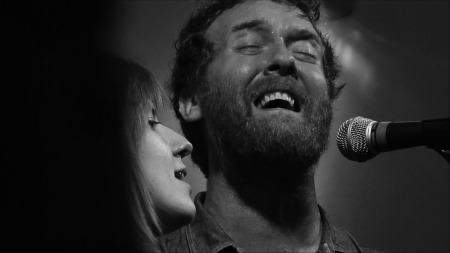
Last night, Silverdocs kicked off with the local premiere of The Swell Season, a documentary about the band of the same name, composed of Glen Hansard and Marketa Irglova. The pair rose to fame as the stars of 2006’s little indie that could, the moving musical love story Once, which captured hearts with its unabashed romanticism and the real-life love story of Hansard and Irglova that served as its backstory. The pair were further solidified as public sweethearts when “Falling Slowly”, one of the songs from the film, won an Academy Award, and the pair were played off the podium before Marketa had a chance to give her speech; host Jon Stewart brought her back on after the commercial, and she gave one of the most inspirational thank yous of the evening.
Filmmakers Chris Dapkins, Carlo Mirabella-Davis and Nick August-Perna had never seen Once, and weren’t familiar with the musical careers of its stars when they were approached to make a tour film about the two-plus year tour that followed their Oscar win. Not only that, but they didn’t even have a background in music films. As they related in last night’s Q&A after the movie, Dapkins’ background was in experimental film, while August-Perna was just finishing up his graduate work in film, and went into the project while intensive studies of Carl Theodor Dreyer were still fresh in his head.
The odd blend of experience and unfamiliarity works to their advantage. Dapkins shot on a digital HD camera, but with a complex mix of film lenses that give the black and white film a slightly timeless look. Their observational style — which, over the course of many weeks of shooting during a couple of years, yielded some intensely personal footage of the tension of the road and the balancing of public and private personas in a band — recalls D.A. Pennebaker’s work in the 1967 Bob Dylan doc, Don’t Look Back.
That made it an appropriate opening night choice for a festival that’s giving special honors to Pennebaker this year, but it also represented a confident choice on the festival’s part. In past years, the opening film has been high profile or a glossy crowd pleaser. But this intimate, often sad documentary about a musical duo that much of the crowd (based on a show of hands) had never heard of, proved that Silverdocs no longer needs to rely on the marquee value of a LeBron James or a gaggle of A-list documentarians to kick off their week.
Instead, they relied on the strength of a skillful little film from first-time documentarians who managed to capture the turmoil of two people falling slowly, but falling apart, rather than in love. Through their lens, we see a pair dealing with the fallout of success in entirely different ways, as Hansard filters his own success through his years of struggling for it, and the uncomfortable relationship with his family that influenced it, while Irglova, only 19 through much of the film, is shell-shocked, only just now coming into her own. Watching the film, even with its sporadic glimpses of over two years of touring, is in many ways watching her grow up.
It may not be as flashy as some of the other films which have opened the festival, but it’s surely one of the best.
View the trailer.
Screens again on Sunday at 6:30 p.m. in the AFI Silver Theater 1.
—
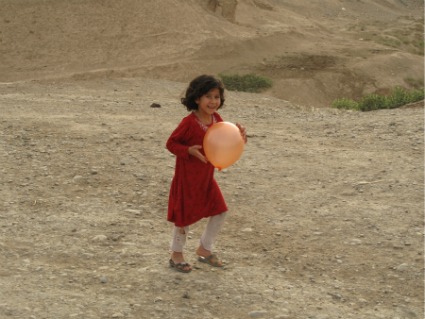
Filmmaker Mark Cousins remembers how he saw the world as a child. He remembers the violence of Belfast, Northern Ireland when he was growing up, but he also remembers the beauty of the place. And so when he travels to Goptapa, an Iraqi village of 700, in The First Movie, he relates to the kids growing up there and hopes to see their world through the eyes of a child. With him, he brings his camera to film, a projector to show movies and three small cameras to give out to the children to “see what’s real for the kids there,” “what images are in their heads.”
This slow, contemplative film alternates between wide sweeping landscape shots with close ups of happy children. Cousins succeeds in producing peaceful, whimsical portraits of Iraq, a place where common imagery is often of violence and suffering. But while Cousins grasps for innocence and the strength of imagination in the film, darker pieces keep slipping through. Like stories of the Anfal, genocidal chemical bombings in the late 80s, told by the children and the adults they film.
The videos the kids make are fascinating — not just for what they record, but how they record them. One ten-year-old boy picks up the director’s role naturally, instructing a group of boys playing soccer to “cheer when you score” and telling another boy to “play with the mud more” while telling a story.
Moments where Cousins involves himself — filming himself, passing balloons out to the kids and filming them play, reading a farewell letter he wrote to one of the boys — can come off a bit contrived. It’s when the children are left to their own devices that the movie really shines, proving how children are often more mature and more aware of their surroundings than adults are comfortable admitting.
View the trailer.
Premieres tomorrow at 2:45 p.m. in the AFI Silver Theater 1, and screens again on Saturday at 10:15 a.m. in the AFI Silver Theater 2.
—

Rather than rehashing some of the well-trodden story arcs from World War II and the Holocaust, The Rescuers attempts to draw parallels between the modern-day issue of genocide and the past efforts of individuals, specifically diplomats, to prevent genocide. Stephanie Nyombayire, a Rwandan, joins British historian Sir Martin Gilbert in a journey across three continents, chronicling 13 people who put themselves in harms way, often against the orders of their own countries, to help save thousands. Some of these “rescuers” and their families were killed or disgraced as a result of their efforts.
Early in the film, an Israeli historian makes the point that these diplomats are just a few of the hundreds of people who tried to save European Jews from death at the hands of the Nazis. But the focus on diplomats is particularly relevant to the local audience, some of whom work at NGOs, embassies or the federal government.
There are obvious parallels to Schindler’s List, but the film is also in reminiscent of Nanking, where European diplomats and missionaries helped protect Chinese citizens from the occupying Japanese army.
While at times heavy-handed, the movie has many touching moments. Most of the surviving “rescued” were children during the war, and their tales of escape and loss are often haunting as you can imagine. One of those survivors featured is a Silver Spring resident, Gus Golderberger, who escaped Denmark thanks mostly to a Nazi diplomat.
While some Americans are mentioned, the film has a British tone. Prince Charles makes an appearance, talking about his grandmother, Prince Alice of Greece, who sheltered a Jewish family from persecution.
The inclusion of Nyombayire, a young woman who lost many family members in Kigali, gives the movie a more modern context, as the genocides in Rwanda and Darfur are touched on. The comparisons between the present and World War II don’t work particularly well, though — no tales of modern-day rescuers are provided.
But therein lies the reminder that individuals must be willing to take action, often against their own self-interest, to prevent evil.
View the trailer.
Premieres tomorrow at 10:45 a.m. in the Discovery HD Theater, and screens again on Thursday at 5:15 p.m. in the AFI SIlver Theater 2.
—
 The Redemption of General Butt Naked
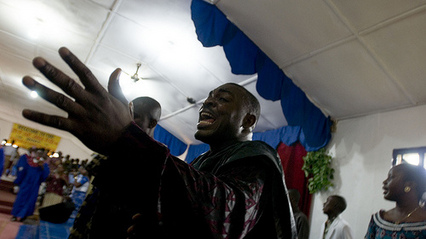
There’s no doubt that the title of this film will elicit more than a few chuckles when read in print, but the story behind General Butt Naked is anything but humorous. When D.C.-based directors Daniele Anastasion and Eric Strauss stumbled upon the legend of Joshua Milton Blahyi, an evangelical preacher who’s past as one of Liberia’s most notorious warlords during a fourteen-year civil war which still reverberates today, their investigations reveal a larger story of what it means to let go of the past.
A typical motif that emerges from many biopics is a dichotomy of two sides in the subject’s life: on one side there is the legend, the public figure; on the other is the man, the private life; and the Sundance-veteran Redemption readily follows suit. Anastasion and Strauss spend act one building up the myth of General Butt Naked through archival footage — nudity features prominently as it was the General’s preferred battle-dress — and anecdotal recounts by those he affected the most, his victims. It was not uncommon to feel a chill down the spine during face-to-face interviews with Blahyi, who talked directly into the camera with the same supremacy and persuasion that brought him into power during the war.
But the historical origins of the General’s mythical status quickly gives way to a complicated assessment of reconciliation and forgiveness in the scope of genocide and war, as Blahyi ventures out to confront his past victims and rebuild his torn country. At several points in the documentary, the filmmakers fling the viewer back and forth on the spectrum of sympathy for Blahyi. They make certain that while you may feel a tinge of clemency for the reformed man, the audience will constantly see shades of Blahyi’s previous skin; the man who once used his charisma and command to send soldiers, many of them children, to their deaths, now sends his countrymen to follow God. “Once a general, always a general,” says one of several skeptical Liberians unable to forgive, but should they allow repentance for a man who admittedly confessed to being responsible for some 20,000 casualties during the war? Or do you allow mercy for a fallible man to heal a country?
View the trailer.
Premieres tomorrow at 8:15 p.m. in the Discovery HD Theater, and screens again on Saturday at 1:45 p.m. in AFI Silver Theater 3.