DCist’s daily roundup of events and films playing this week at the AFI/Discovery Channel Silverdocs festival. Check out our previous reviews here, here, here and here.
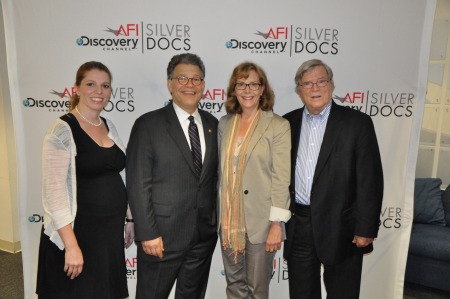 Festival Artistic Director Sky Sitney, Senator Al Franken, and filmmakers Chris Hegedus and D.A. Pennebaker at last night’s Guggenheim Symposium at Silverdocs.
Al Franken took the podium at the AFI Silver Theater 1 at the Silverdocs festival last night to introduce the honorees of this year’s Charles Guggenheim Symposium. He ran down some of the impressive list of people and events they’ve captured through their lenses over the years, which includes Bob Dylan, Jimi Hendrix, Jane Fonda, Janis Joplin, the 1992 Clinton Presidential Campaign, Stephen Sondheim and John DeLorean. Perhaps most memorable? “Me,” Franken chuckled.
Indeed, Franken has been the subject of two films by cinéma vérité luminaries D.A. Pennebaker and Chris Hegedus, who have spent nearly 50 years (in Pennebaker’s case — Hegedus joined up with him in the late ’70s) pointing their cameras at some of the most influential and fascinating figures of 20th century music, theatre and politics. After a clip reel showing off some memorable moments from their body of work, the pair took the stage for a lengthy Q&A with former NPR Weekend Edition host Liane Hansen that covered everything from Pennebaker’s time spent hanging out with Dylan to how Hegedus managed to get such an intimate portrait of the fallout of the dot-com bubble as it was in the midst of bursting in Startup.com to Pennebaker’s fascination with the evolution of fact-based film, whether it’s citizen reporting, reality television or people attaching cameras to their cats’ collars.
The amount of history that they’ve been witness to is staggering — which is why it was good to hear at the end of the discussion, just before they were presented with the sparkling snow globe that is the Guggenheim award, that much of their current activities are centered around preservation activities. The pair are working on saving films that are on long-since obsolete tape formats, like the sprawling 5-hour 1977 PBS documentary The Energy War, which found the pair, in their first collaboration, documenting the dramatic and grueling 18-month battle over Jimmy Carter’s energy policy. Those preservation efforts aren’t limited to their own films, either: their distribution company has also kept in circulation films by their contemporaries, including recently-departed director Richard Leacock. They closed the Q&A with a clip from his 1965 film on Igor Stravinsky.
If you’re unfamiliar with the work of these filmmakers, or just need an excuse to revisit them, the AFI has you covered. The end of Silverdocs segues right into a week-long retrospective of their work, hitting most of their biggest titles, from Pennebaker’s ’60s work on Jane and perhaps the greatest music documentary ever made, Don’t Look Back, on through the most recent Hegedus-directed entries, Al Franken: God Spoke and King of Pastry. Check the schedule for the full schedule and screening dates and times.
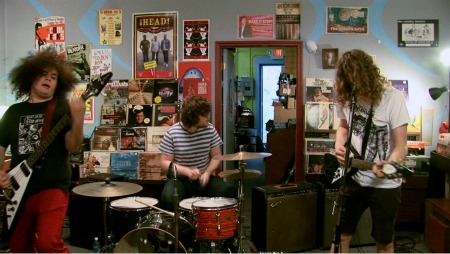 Better Than Something: Jay Reatard
In his all-too-brief 29 years, garage rocker Jay Reatard cultivated a reputation as an enormous talent, prolific musician and prickly bastard. Better Than Something: Jay Reatard reveals him as all of the above, but mostly as a troubled young man lost at the height of his powers.
Reatard’s public persona was that of an ornery bully, an antagonist whose nihilistic streak was immortalized through an infamous YouTube clip of him punching an audience member in the face. At a time when musicians are encouraged to provide their fans with unfettered access, Reatard’s aggression and hostility was met with enormous derision. Here, he is portrayed as a driven and engaging character whose demons occasionally get the best of him.
Shot in April of 2009, directors Alex Hammond and Ian Markiewicz follow Reatard through his hometown of Memphis, making a convincing case that Jay’s personality is intrinsically linked to the hostile surroundings and tumultuous home life from which he came. He is also a product of Memphis’ insular music scene, one that prizes the scuzzy garage rock best embodied by local legends The Oblivians.
Reatard’s upbringing instilled a sense of urgency that seemed to inform every facet of his life. Early on, he makes the decision to release as many records as possible, averse to even the slightest sense of inertia. When friends suggest he slow down, he equates relaxation with stagnation. “Why don’t I relax? I’m not Joan Baez,” he responds.
Jay’s preoccupation with death — something he discusses frequently throughout the film — provides Better Than Something with a few haunting moments, but his attitude is far from the fatalism heard on record. Though surprised he managed avoiding joining The 27 Club — the age in which many famous musicians have passed — Reatard hardly romanticizes the live fast, die young cliché put upon him.
When news of his death spread in early 2010, there was a certain cynicism that Reatard’s death was a fait accompli, a fact the film swiftly rebukes through anecdotal reports from friends and acquaintances. Jay likely had a bright future ahead of him that we’ll never get to see; Better Than Something stands as a bittersweet coda to the life he lived.
View the trailer.
Premieres tomorrow at 8 p.m. in the Discovery HD Theater, and screens again on Sunday at 9:15 p.m. in AFI Silver Theater 2.
—
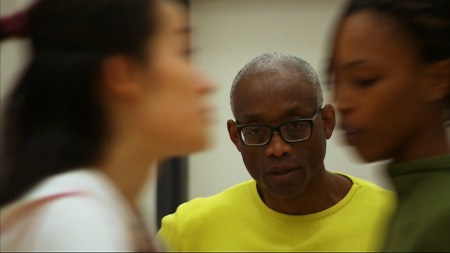
Welz Kauffman, president and chief executive of the Ravinia Festival, says of renowned choreographer Bill T. Jones, “Is there anything further from the Nutcracker than Bill? Probably not.” Kauffman’s organization, based in Highland Park, Illinois, commissioned the modern dance great to create a piece to celebrate Abraham Lincoln’s bicentennial. But why Jones? And what would he have to say about Lincoln? Jones himself wrestled with both questions, and A Good Man follows that struggle carefully.
Jones is a fascinating character, asking over and over if Lincoln was a good man, if we are good men today, and recognizing that given his skin color, when he says Lincoln, people hear “abolition.” He’s trapped by assumptions already made about his project, and at the same time crushed by the volumes and volumes of possibilities available to him. But it’s this battle that makes his creative process that much more powerful — and his final product that much more evocative.
Filmmakers Bob Hercules and Gordon Quinn were fortunate enough, as they stated in the Q&A after the film’s screening on Thursday evening at the Discovery HD Theater, to have been offered the opportunity to capture the creative process from start to finish. While it “took some time,” in Quinn’s words, to earn Jones’ trust, the film crew eventually faded into the depths of rehearsals, watching the dancers work from every angle. As the dancers rehearse, Jones gives plenty of insight into what eventually becomes the Bill T. Jones/Arnie Zane Dance Company’s Fondly Do We Hope…Fervently Do We Pray. While the crew faded into the depths of Jones’ life as well, capturing his moments of doubt, anger, joy, it’s clear he’ll never give up all his secrets, including those of the creative process. And that, really, is because the “secrets” of the process just can’t be put into words. Jones’ process (and art’s development, really) is about the intangibles, and the evidence of that on display in A Good Man is delightful to watch.
View the trailer.
Screens tomorrow at 11:15 a.m. in AFI Silver Theater 3.
—
Deciding to donate one’s egg or sperm is a lofty decision, requiring both personal reflection and analysis of the larger social consequences of our evolving definition of the nuclear family. That’s not what this documentary is about.
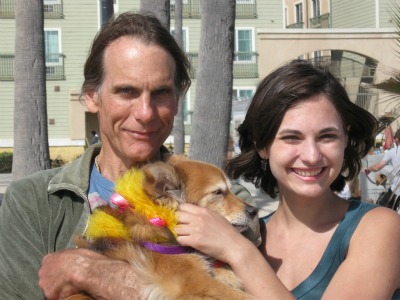
But that’s the implication of the doc’s title, Donor Unknown: Adventures in the Sperm Trade — a film that features the children of one particular sperm donor, rather than the 200 million faceless “souls” in each donor cup. In this case, “unknown” donor number 150 is Jeffrey, a veritable hippie living in an RV on the Venice Beach Boardwalk with his pet dogs and pigeon. To say director Jerry Rothwell takes advantage of the potent quotables and hijinks that ensue from Jeffrey would be an understatement. And it’s that persistent tongue-in-cheek scripting that prevents any lingering focus on JoEllen, the ostensible protagonist of the story, or any of the other dozen or so offspring of Jeffrey, brought together by a New York Times front page story. Nor is there any meaningful investigation into the sticky underbelly of the sperm donation business.
There is an endearing flailing among these young adults, all around 21 years old, as they cope with the discovery of their origins. The question of whether or not these kids will ever have a relationship with Jeffrey is addressed — “probably not” is the answer — but their new social network of siblings sparked and spurned by the Internet sets this documentary apart from other similar films. Imagine finding a new Facebook group of friends who happen to share 50 percent of the same DNA and knobby big toes.
Even with all the film’s jabber about identical eyebrows and foreheads, and similar interests in dancing or philosophy, maybe there really isn’t a battle between Nature vs. Nurture here, but rather — and forgive the triteness — it’s the search that defines the sibling bond.
View the trailer.
Screens tomorrow at 3:30 p.m. in the Discovery HD Theater.