Martin Austermuhle
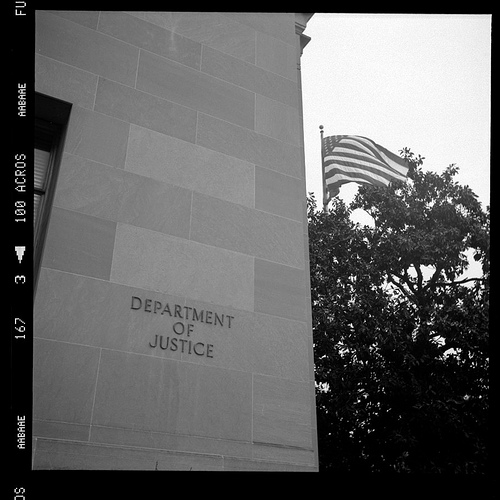 Photo by GRandallJ.
The Obama administration’s hands-off approach when it comes to states with medical marijuana programs seems to have come to a swift end, provoking fears that the District’s own nascent program will grind to a halt before licenses are even granted for dispensaries and cultivation centers.
Reason’s Mike Riggs reported yesterday that the Department of Justice sent out a memo to the DEA and U.S. Attorneys across the country stressing that regardless of what specific states say, growing or distributing marijuana is still a prosecutable federal offense. The new memo appears to override a 2009 opinion known as the Ogden memo in which the department essentially said that prosecuting individuals involved in the medical marijuana business simply isn’t an effective use of resources.
This week’s memo, authored by Deputy Attorney General James M. Cole, states:
Persons who are in the business of cultivating, selling or distributing marijuana, and those who knowingly facilitate such activities, are in violation of the Controlled Substances Act, regardless of state law. Consistent with resource constraints and the discretion you may exercise in your district, such persons are subject to federal enforcement action, including potential prosecution. State laws or local ordinances are not a defense to civil or criminal enforcement of federal law with respect to such conduct, including enforcement of the CSA.
The memo follows several months of threats from U.S. Attorneys to states with medical marijuana programs; a few of them, including Arizona, which is in the midst of implementing a 2010 voter referendum permitting medical marijuana, has put its program on hold pending clarification from the feds.
How will this affect the District? While it’s unclear how aggressively the feds would pursue a program limited to five dispensaries and 10 cultivation centers, this emboldened threat could surely scare off anyone willing to invest the substantial amount of money needed to jump into dispensing or growing marijuana for medicinal use. As of June 17, the last day letters of intent from budding medical marijuana entrepreneurs were being accepted by the Department of Health, over 80 individuals and groups gave notice of their hopes to run dispensaries, cultivation centers, or both. Though there’s no set timing for when applications will be made available to them, it’s likely that some will back away in the face of the new federal ultimatum.
There’s one wrinkle that may allow the District to proceed relatively unhindered, though. According to regulations drafted to govern the city’s medical marijuana program, no one cultivation center can grow more than 95 plants at a time. Why does this matter? Because mandatory minimum sentences kick in at 100 plants. That being said, the District allows individuals to hold multiple licenses for cultivation centers, so there’s the possibility that one person or group could be growing marijuana enough to attract federal attention. Regardless, the District’s program does have an Achilles Heel — it prohibits home cultivation. As such, if the feds were to come down on cultivation centers, the whole program would collapse in on itself.
Hoping to sort out all of this uncertainty, Montgomery Blair Sibley, who has applied for both dispensary and cultivation center licenses, filed a lawsuit against the federal government in mid-May. His lawsuit seeks to stop the Department of Justice from enforcing the Controlled Substances Act in the District until a judge can sort out how to balance state and federal law when it comes to medical marijuana programs. (Arizona has filed a similar lawsuit.)
Sibley’s claim has an interesting twist that turns the District’s second-class status on its head, though. According to Sibley, because Congress passively approved the District’s medical marijuana program (as it has to do with all legislation passed by the D.C. Council), it also implicitly repealed the Controlled Substances Act for the purposes of enforcement in the city. Citing legal precedents dating back to the 1800s, Sibley argues that “Congress cannot on one hand criminalize the growing and possession of marijuana as it has done under the Controlled Substances Act while at the same time subsequently allowed such growing and possession in the ‘a precisely drawn, detailed statute’ which is the D.C. Medical Marijuana Act.”
The Department of Justice, which responded this week, apparently isn’t impressed by Sibley’s legal cleverness. In a 15-page rebuttal, it argues that Congress showed no intention to exempt the District from the provisions of the Controlled Substances Act, so it can’t be assumed that that’s what it was planning to do when it allowed the District’s medical marijuana program to take effect. It also states that since the city’s program isn’t even functioning yet, any preemptive lawsuit is a waste of time.
Sibley has until next week to respond, and then it will be left to a judge to see whether he prevails or not. Either way, this new round of jostling between the federal government and states with medical marijuana programs is sure to delay the District’s own attempts even further. Currently, it’s not looking like medical marijuana will be available in the city until at least 2012, and even then, this new federal threat brings into question who would want to take the risk of actually growing or dispensing it.