Martin Austermuhle
 Photo by Chris Rief aka Spodie Odie
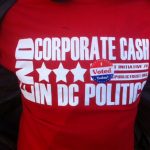
Former Ward 1 and At-Large D.C. Council candidate Bryan Weaver and Ward 7 ANC Commissioner Sylvia Brown are planning on filing paperwork this afternoon that would put a measure banning corporate contributions to electoral campaigns before District voters this November.
Currently, District law allows corporate contributions up to $500 for ward races, $1,000 for at-large and $2,000 for mayor per year. Under Weaver and Brown’s proposal, which was first reported by the Post, the District would follow the lead of the federal government and 23 states in banning direct corporate giving to local campaigns and legal defense funds, transition committees, inaugural committees and constituent services funds. To take effect, the measure would have to be approved by D.C. voters and make it through a congressional review period.
A summary of the initiative to be submitted to the D.C. Board of Elections and Ethics stated:
This ballot initiative is to restore the public trust by eliminating the outsized influence corporate money has in District of Columbia government and elections by prohibiting direct contributions from corporations to elected officials and candidates for public office. This measure would align D.C. with federal law, which bans direct corporate contributions to public officials and candidates. Although D.C. law has individual contribution limits, corporations can exceed these amounts by creating multiple entities that shield the individual owner. Current law also allows corporations with city contracts to contribute directly to elected officials who approve these contracts, creating conflicts of interest.
Weaver told the Post that he took inspiration from a similar measure proposed by former Councilmember Kathy Patterson (D-Ward 3) and is being supported by Councilmember Tommy Wells (D-Ward 6), who has pushed proposals to ban the bundling of corporate contributions.
The fight to ban corporate contributions — notably bundling — isn’t new for Weaver. When he ran again Councilmember Jim Graham (D-Ward 1) in 2010, he pointed out that the incumbent took in thousands of dollars in bundled corporate campaign contributions. Late last year, he testified before the D.C. Council on a comprehensive ethics bill, pleading that big money in local politics be addressed.
“Big money diminishes accountability, transparency and inclusiveness in our government. It determines who runs for office and where those candidates stand on the issues. Money should not determine how our elected officials spend their time in the Wilson Building. Issues facing the city should do that. Problems facing the residents should come first,” he said on November 30. “Many of our council members may have their hearts in the right place, but how they fund their campaigns raises serious questions about where their priorities may be.”
In December, WAMU reported that corporate contributions for the 2012 campaign were on the rise — for five council candidates up for re-election, it reported, campaign finance records showed individual contributions at $430,000 and corporate contributions at $360,000. Many of the contributions came in the forms of bundles, or separate contributions from LLCs located at the same address. In one case, Councilmember Vincent Orange (D-At Large) took in $9,000 from nine LLCs registered to the same Virginia address and linked to Joe Mamo, a D.C. gas station mogul.
Coincidentally, Weaver’s filing comes on the same day that protesters are participating in Occupy Congress, where they’re protesting corporate influence in politics. Additionally, Occupy D.C. protesters will ask the D.C. Council to pass a resolution prohibiting corporate personhood, according to The Huffington Post.
Still, the constitutionality of Weaver’s proposal could be an issue down the road, writes the Post:
But some legal observers believe it is only a matter of time before the Supreme Court overturns the ban on direct corporate contributions. A 2003 Supreme Court decision, Federal Election Commission v. Beaumont, upheld the ban, but last year a District Court judge in Virginia overturned it in a ruling that cited Citizens United. It is unclear whether that case will reach the high court.
For now, though, that isn’t stopping Weaver and Brown, who plan on filing the paperwork this afternoon at the D.C. Board of Elections and Ethics. To get it on the November ballot, they’ll need to collect over 22,000 signatures from registered voters within six months.