Martin Austermuhle
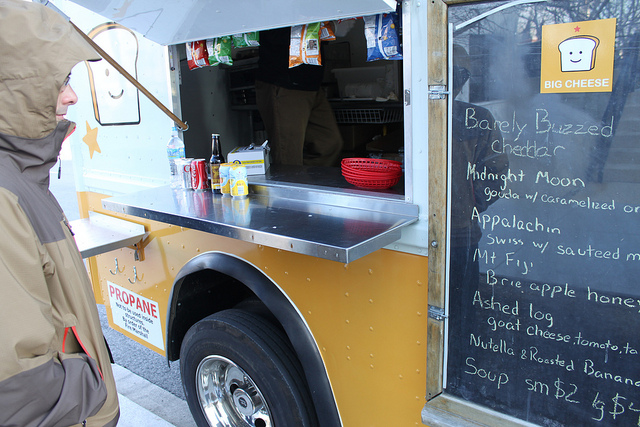 Photo by BrianMKA
It looks like it might be smoother sailing for food trucks in the District under a new set of rules published today that would regulate where, when and how they can operate throughout the city.
Amongst the most significant changes is the establishment of “Vending Development Zones,” or areas around town where food trucks could operate more freely. The rules have additionally been tweaked to allow food trucks serving savory foods to remain in a specific location as long as they’ve paid for the parking; under existing rules, they have to move if they have no customers in line. Dessert trucks, though, will still have to move along if they go more than 10 minutes without a new customer. Sidewalk vendors would also benefit under the new rules, with new areas being designated for where they can do business.
The rules are an attempt calm what has been a tense relationship between brick-and-mortar restaurants and the food trucks and bring more clarity to where exactly they can operate. Regardless, the rules are not binding upon the National Park Service and U.S. Park Police, both of which have participated in crackdowns on food trucks when they have operated near federal parks.
Additionally, it’s still not certain how traditional restaurants will respond, and if they will exercise their influence to push the D.C. Council into rejecting the rules, as reported the Post’s Tim Carman today:
Initial responses to the vending development zone concept were lukewarm. Andrew J. Kline, spokesman for the Restaurant Association Metropolitan Washington, said he wasn’t sure how the zones would solve the conflicts involved in managing the District’s public spaces for both in-line restaurants and mobile food trucks. For starters, he noted, the zones still would not address the food trucks’ need for parking spots that stretch beyond the two-hour limits.
Edward S. Grandis, executive director of the Dupont Circle Merchants and Professionals Association, said he was loath to comment on the regulations without seeing them, but he reiterated DC Map’s position that food trucks are “illegal, period, the way they have been operating.”
Last week, Lynne Breaux of the Restaurant Association Metropolitan Washington told the Post that while she supports expanding food options, she sees an unfair advantage for food trucks.
“This has been quite the controversial issue; RAMW is all for expanding food options and legalizing food trucks. Restaurant outdoor dining necessitates 18 different reviews prior to obtaining a public space license, there does appear to be a disparity between such a lengthy regulatory process and using public space almost at will. RAMW very much looks forward to continued working towards a resolution,” she said.
In a statement released today, Mayor Vince Gray expressed his support for food trucks and commended the new rules as an important way to move forward.
“Street vending, food trucks and farmers’ markets are important components in increasing the District’s quality of life for residents, workers and visitors, and my new regulations are designed to strike a careful balance between encouraging business innovation and respecting our laws as well as brick-and-mortar businesses that have long played according to the rules. These proposed regulations eliminate outdated requirements, make it easier for the smallest of entrepreneurs to set up a business here and expand the food options available to consumers,” he said.
Carman additionally wrote that the new rules came from 19 months of work and 2,500 public comments. Before they can become official, they’ll be open to 30 more days of public comment and eventually land before the council.