Martin Austermuhle
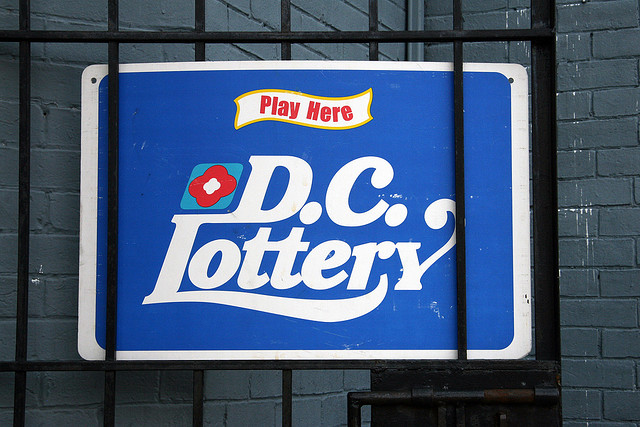 Photo by sissnitz
Even though Internet gambling has been legal in the District since early 2011, it remains but an idea that hasn’t yet become reality. Ongoing controversy over how it came to be has led its proponents to hold off on implementing it, and tomorrow a D.C. Council committee will hold a hearing on legislation that would repeal it altogether.
To summarize: in December 2010, Councilmember Michael Brown (I-At Large) inserted a short provision into a larger supplemental budget bill legalizing Internet gambling. By April 2011 the measure had passed Congress, making the District the first jurisdiction in the county to allow Internet gambling.
By the end of June, though, outcry from opponents and concerned residents forced the D.C. Lottery and the D.C. CFO to postpone implementation of the program and instead host a series of townhall meetings in every ward. At the same time, Councilmember Tommy Wells (D-Ward 6) and Phil Mendelson (D-At Large) introduced legislation that would repeal the Internet gambling provision.
From beginning to end, the program — which Brown estimates could raise $15 million or more for the District’s coffers — has been mired in controversy. Critics say that the council erred in passing Internet gambling as part of a broader budget bill instead of a stand-alone that would be subject to normal hearings and markups. More recently, a report by the D.C. Inspector General found that D.C. CFO Natwar Gandhi improperly amended a 2008 lottery contract worth $120 million to include a provision that would eventually allow Brown to propose Internet gambling be legalized.
Even the townhalls have been questioned. First, they were all scheduled for August and early September — the very months when most people travel. (They were eventually rescheduled for October through December; we attended one in Ward 5.) After they happened, a December report from the D.C. Lottery summarizing them said that the majority of participants expressed their support for Internet gambling. Still, some critics said, only 254 people throughout the city attended the townhalls, and many went to multiple ones.
And this month, The New York Times published an article saying that studies have found the profits for Internet gambling to be much more modest than its proponents claims.
All told, the majority of the opposition is less focused on the drawbacks of Internet gambling itself than it is over how it came to be law in the District.
“I do believe that we’ll eventually have intrastate Internet gambling,” admitted Marie Drissel, a Ward 2 activist and former council candidate who had loudly protested the way Internet gambling was passed.
“But I think D.C.’s law is fatally flawed. All of the laws across the country are a lot longer than half-a-page, which is what ours is. In 39 years, I’ve never seen anything like this. There’s going to be more print written about the color of taxicabs than there is about this. There’s no legislative history. There’s nothing,” she said.
There are even deeper concerns, she added, including the fact that the rules for the program will be written by the CFO and that the Lottery Board hasn’t had members since 1996.
At a recent meeting of the Ward 3 Democrats, Drissel and Mendelson outlined their concerns with the program. (Brown was scheduled to attend but did not, citing a prior commitment.) Drissel and Ward 3 activist Ann Loikow pushed a resolution calling on the group to demand that the council “develop a more detailed piece of legislation, after full and substantive public hearings,” but it was not voted on due to procedural issues.
At the event, Mendelson issued a mea culpa of sorts. “I was guilty at the time of voting for the bill,” he said.
For Brown, every day that the District delays the program it loses out on potential revenue. “I think we’re relatively hopeful that implementation will be relatively imminent,” he recently told us. (In September, he penned a long letter to the council defending Internet gambling and the way it was passed.) Today, the CFO responded with a statement saying that it did nothing illegal or untoward in how it worked Internet gambling into the 2008 contract.
As for the prospects of the repeal that will be discussed tomorrow, beyond Wells, Mendelson and possibly Councilmember David Catania (I-At Large), people with knowledge of the issue assume that it may not have the votes to pass the council. A good number of the 77 people that have signed up to testify tomorrow, including Drissel, certainly hope to change that.
But even tomorrow’s hearing, which will be chaired by Councilmember Jack Evans (D-Ward 2), has provoked some controversy. According to the agenda, the hearing will start at 10 a.m. and recess at 1 p.m., restarting at 6 p.m. Government witnesses will testify first, likely leaving the 77 residents and activists to share their thoughts late into the night.
“The council is compounding its illegal passing of further Lottery legislation in December, 2010 with no public hearings, with further insult to the residents of the District who wish to be heard on this important matter,” said Denis James, president of the Kalorama Citizens Association, in an email sent yesterday.