Martin Austermuhle
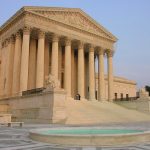
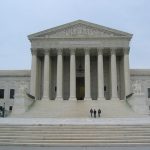
Some people wait in line for concert tickets. Others for food, like cupcakes and hamburgers, or the newest generation of whatever Apple product is hottest. But Kathie McClure and Monica Haymond are among the people that started lining up outside the Supreme Court late last week, hoping to get into one of the three hearings starting today on President Obama’s controversial health care reform law.
McClure, a lawyer from Atlanta, arrived outside the court on Friday at 1 p.m., claiming the fourth spot in line. For her, a trip up to D.C. to grab one of the 60 seats reserved for the public in the court’s chambers is personal—her two kids are chronically ill, a son with diabetes and a daughter with diabetes.
“If Obamacare is upheld by the court, in 2014 the insurance companies will be required to sell them a policy despite the fact that they have pre-existing conditions. And they won’t be able top charge my kids more just because they’re sick. It’s a big deal to us,” she said.
Haymond, a 23-year-old legal assistant with the government who blogs about the Supreme Court, shared the same personal investment in seeing Obama’s health care reform upheld by the court. Her father, who died last year from lung cancer, hadn’t been able to get health insurance after he returned from a tour of duty in Vietnam; her two sisters similarly lack any coverage.
“If either of them get sick, we have no idea what they’ll do. if they get into a car accident, if they get hurt—we just don’t know,” she said. “It is imperative that the Supreme Court uphold this law, because it’s going to affect everyone.”
Both hope to get in to see Tuesday’s hearing, when the justices will hear arguments for and against the individual mandate, the heart of Obama’s reform plans. Today the court will debate whether or not they can even consider the law because of a law dating back to 1867 that prevents courts from hearing tax-related cases until the tax in question is actually imposed—in this case, that’s not until 2015—while on Wednesday they’ll mull whether the rest of the health care reform could survive if they individual mandate were struck down.
Despite the historic hearings that are set to start this morning, McClure and Haymond were but a small minority of the 50 or so people waiting in line on their own behalf on Sunday afternoon. The majority of the people mingling by the court were professional line-standers, having been hired to hold a spot for someone else. Many were veterans of House and Senate hearings; few talked about how much they were getting paid for such a high-profile event, though some admitted that it wasn’t any more than their usual hourly rates, between $30 and $50.
But regardless of whether there for themselves or on behalf of someone with some money to spend, a certain sense of solidarity had developed among the people patiently waiting in line—especially given the rainy conditions they had to endure over the weekend.
Since McClure arrived with little more than a chair and a suitcase—it’s her first overnight wait, she admitted—Haymond’s boyfriend brought her a sleeping bag, sleeping pad and umbrella. (She also got a tarp from friends in Alexandria, which she said was especially helpful when the court’s sprinklers came on every morning.) Most queuers were willing to take turns heading to a local Starbucks for bathroom breaks, coffee and to recharge their phones.
For McClure, the experience has only made her believe more strongly that cameras should be allowed in the court. While the justices haven’t seemed to take kindly to the idea, they did budge a little—audio of the day’s proceedings will be available at the end of every day, instead of the usual end-of-the-week releases.