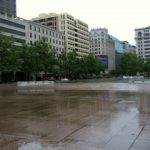
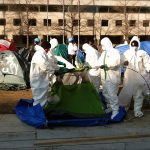
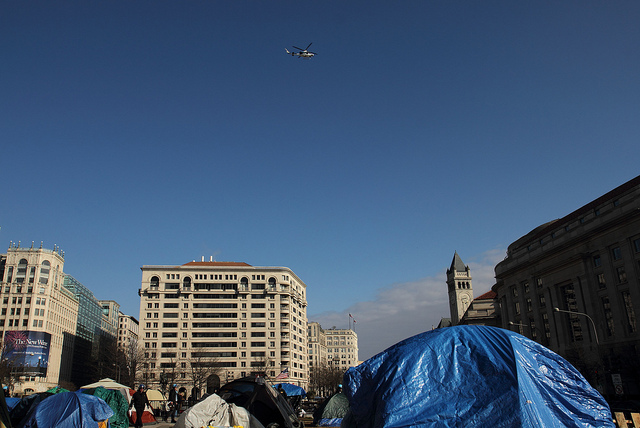
 Photo by Mr. T in DC
After six months of mixing up the youthful and sometimes locally focused rabble-rousers at McPherson Square and the timeworn and broadly minded demonstrators of Freedom Plaza, there may be no more confusion as to who constitutes the protest movement known as Occupy D.C.
The two encampments started to discuss joining forces at a meeting last night at McPherson Square. It’s still premature, members of the McPherson Group say, but the idea seems to be that the group at McPherson Square would absorb Freedom Plaza.
Actually, it’s far more procedural than that. The Freedom Plaza protesters, unlike their McPherson Square counterparts, obtained a permit several months ago to keep their demonstration going. But that permission is due to expire at the end of the month, and some at Freedom Plaza believe they might not get a renewal.
The McPherson group, on the other hand, has since its inception resisted getting official permission to pitch tents and maintain round-the-clock protests. One member of that encampment told DCist that the notion of getting a permit would lead to a cannibalization of its activities.
“Requesting a permit is essentially agreeing to fit your protest into the framework of the authorities,” said Caty McClure, who has been protesting at McPherson Square since it popped up last October 1.
While going without a permit is very much symbolic, McClure said, she views it as an essential marker of Occupy D.C. “If you tell someone they can give you permission to dissent, you’re also telling them that they can take it away,” she said.
But some Freedom Plaza protesters’ insistence on requesting a permit for McPherson Square once they move their signs and tents there has been met with widespread opposition to the square’s longtime occupiers. The camps expect it will take the rest of the weekend to smooth over the details of the potential merger.
McPherson Square started filling up with tents last October 1 as the D.C. extension of the Occupy Wall Street demonstrations that began in New York last September. While the New York group targeted their rage at major financial institutions, protesters here said they were focusing on the intersection of money and politics. The demonstrators were mostly young people disaffected with the lingering effects of the recent recession and a lack of government transparency.
A few days later, a coalition of longtime activists staged an event on Freedom Plaza called Stop the Machine, which kicked off an extended stay in protest of U.S. foreign and environmental policies. The group soon changed its name to “Occupy Washington D.C.” to keep up with the times. While the two groups’ messages were never far off, they often butted heads on tactics and on which one was the “real” Occupy D.C.
Still, should the merger go off, perhaps both groups can coalesce around the fact that combining at McPherson Square achieves the exact opposite of Mayor Vince Gray’s request in January that the camps be merged at Freedom Plaza.