Martin Austermuhle
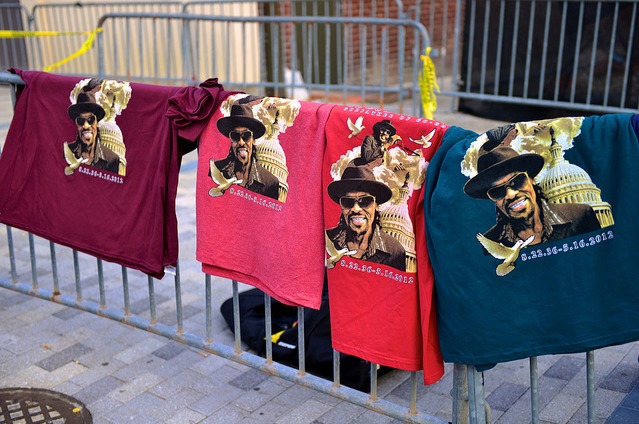 Photo by Brian G. Smith
Last Thursday’s memorial to Chuck Brown was a celebration befitting of the Godfather of Go-Go—there were impassioned musical tributes and somber remembrances alike. But it was D.C. Council Chair Kwame Brown that seemed to make one of the most pointed statements of the service.
During a scheduled speech, Brown played up his own local roots and how much go-go meant to him. “I am go-go,” he said. “To the media, you better get that right.” But it wasn’t just that, reports the Post:
As much as the crowd loved the game of one-upsmanship, there was a persistent undercurrent of tension about the city’s direction. Kwame Brown drew cheers by reviving the slogan Marion Barry tossed at white Washingtonians in 1994, when voters returned him to the mayor’s office after his prison term on crack cocaine charges: “For all of the people who just moved to Washington, D.C., and have a problem with go-go music,” the chairman said, “get over it.”
It was probably the strangest moment of the memorial for me; I caught myself asking, “Is anyone really opposed to go-go?” Not really, but that wasn’t so much Brown’s point. He was speaking to the fact that go-go has been slowly pushed out of the city as much as he was trying to shore up his own image amid rampant rumors of a coming federal indictment.
In 2010, Natalie Hopkinson, author of the forthcoming “Go-Go Live: The Musical Life and Death of a Chocolate City,” wrote in the Post of the declining presence of go-go in the very city that birthed the genre:
Cities change all the time, but this is about more than mourning what’s gone. As go-go shifts to the margins in the District, we are losing something bigger. Go-go may be invisible to much of white Washington, but it’s as much a part of the city as the pillars and monuments of its federal face. On any given day, in any number of clubs, parks, community centers, schools and back yards throughout the region, you can find up to a dozen young musicians on a stage, playing before ecstatic, sweaty crowds.
Go-go is Washington. The music never made a real national splash, but it has come to reflect this city, its artistic pulse and the often painful reality of life for many of its black residents.
In her book, Hopkinson links the city’s gentrification to the loss of go-go. But she also admits that just as gentrification is a complex and complicated process shaped as much by market forces as it is by overt government action, the disappearance of go-go from D.C. can’t easily be blamed on just one thing or group.
In fact, that go-go has been pushed out of D.C. may have more to do with the very government whose senior-most officials are now pledging to build everything from parks to a hall of fame to commemorate it. “The most direct attacks on go-go as a genre that I see are coming from the D.C. government—local police, the ABC board granting liquor licenses as well as individual club owners who don’t want to book go-go acts,” Hopkinson wrote in an email.
As the City Paper reported last year, go-go shows have certainly been shut down by police, more over fears that there might be violence than anything else. (Two years ago, MPD admitted to publishing a “go-go report,” essentially a glorified show listing that police said helped them plan for places where they might expect trouble.) Those shutdowns, though, have been spurred by residents of all colors and backgrounds.
And as much as Brown may have been reflecting—simplistically, as it were—on the various forces that have pushed go-go to the margins of the city and beyond, he was also using the Godfather of Go-Go’s funeral service as a means to shore up his own base, Hopkinson added: “Kwame is under siege under criticism and investigation. He also said ‘I AM go-go.’ He was trying to get some political help from a very forgiving community.”
That political support isn’t to be underestimated, either. At the 2010 funeral for go-go legend Little Benny, then Mayor Adrian Fenty was booed by the crowd, a foreshadowing of the electoral drubbing he was handed in the Democratic primary. (During the campaign, Fenty tried using the go-go community to regain support he had lost during his first years in office, too.) And it certainly wasn’t lost on anyone that the D.C. politician that was most warmly received at the service was Marion Barry, a man that is equally loved and despised by different segments of the city.