Martin Austermuhle
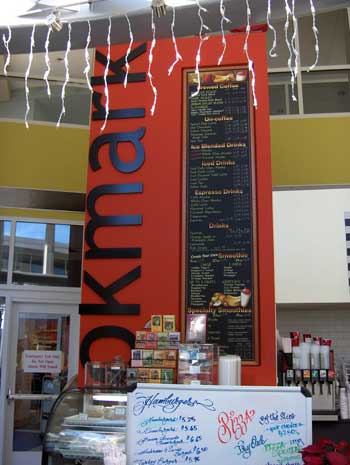 The Bookmark Café in the Santa Monica Public Library. Picture courtesy of sister site LAist.
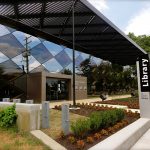
As we recently wrote, the D.C. Library system has gone on something of a building spree as of late, totally rebuilding or significantly renovating public libraries across the city. The last library that will be rebuilt from the ground up is the Woodridge Library on Rhode Island Avenue in Northeast D.C., which is currently housed in a building dating back to 1958.
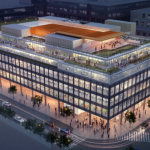
DCmud got some initial renderings of what the new library will look like, and much like its new counterparts in other parts of the city, it will be a dramatic new structure that redefines what it means to go to the library. During a community meeting to discuss the new library, though, an interesting idea was floated: the need for a café.
There are still lots of maybes on the table—like whether the facility will include that café, something residents throughout the city have clamored for in their libraries, but which doesn’t yet exist in any of the new structures.
This certainly isn’t the first time this idea has come up: during a discussion hosted by the Urban Land Institute on what to do with the Martin Luther King, Jr. Memorial Library, various panel members encouraged new amenities for patrons, including a café. (One panelist even pushed for a cupcake option, saying that a second outpost of Georgetown’s popular Baked & Wired would work well at MLK.)
We’re pretty far behind the curve on this one, all told. Boston’s main public library has one. So does San Francisco’s, Westport’s, Santa Monica’s, and others. Locally, the Georgetown University Library has a popular café, while George Washington’s Gelman Library has a Starbucks. Back in 2005, a writer for the Washington Library Library Association Journal touted the values of the library café:
The prospect of added revenue is one reason. Coffee chains may pay rent, donate food or beverages to the library, or contribute a percentage of profits to the library. Coffee shops also may help entice people into the library, where they might use other library services. It works in bookstores, so why not in libraries? Are students hanging out and studying at the local Starbucks? Maybe the library can provide a similar service. Having a coffee shop, where food and drinks are permitted, makes it easier to enforce a food and drink policy in the rest of the library. And many library leaders have always tried to anticipate what their patrons will want next. For whatever reason, some libraries feel that the time has come for library coffee shops.
In D.C., maybe that time is now.