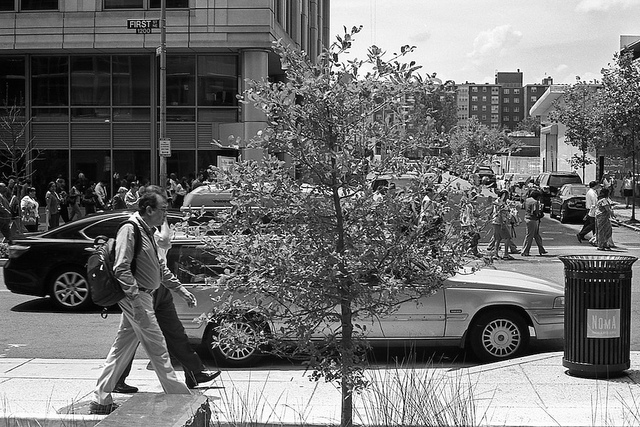
 Photo by Gordon Jimson
The District plans to spend nearly half a million dollars on the greening of NoMa, the constantly under-construction neighborhood that is long on new, glassy office towers, but short on recreational space.
Mayor Vince Gray announced $490,000 in public funding for a network of parks to be installed in NoMa over the coming years in a letter earlier this week to Robin-Eve Jasper, the president of the NoMa Business Improvement District. The D.C. funds will go toward developing the BID’s $50 million parks development plan, which envisions filling NoMa with a smattering of postage-stamp-size green spaces to complement the usual sights of construction cranes and corporate buildings.
“Developing parks and open space in NoMa, a neighborhood whose growing population of residents, employees and neighbors currently lack dedicated recreational amenities, is an important step in achieving that vision,” the mayor wrote in his letter, which was read at a community meeting on Wednesday evening.
Most of the comprehensive parks plan is being paid for with the BID’s private funds. At first, the organization contemplated installing one large, central park for the neighborhood that would have cost about $50 million, Rachel Davis, the group’s marketing director, said. The price of building a network of smaller parks is estimated to be the same, she said.
NoMa’s park plan, which is being developed with the design firm AECOM, includes outdoor fitness facilities, dog parks, public art installations, picnic tables, bike racks and tree-lined plazas. The Tracks Park, for instance, abutting the Burnham Wall, would convert an elevated parking lot next to the nearby train tracks into a neighborhood recreational area and considerably sized dog park, NoMa’s proposal suggests.
In his letter, Gray said the parks funding falls under his “Sustainable D.C.” plank of making Washington a greener, more walkable city. Gray originally requested $18 million for the parks plan in the District’s fiscal 2013 budget, but that money was repurposed by then-Council Chairman Kwame Brown, who steered it toward affordable housing programs.