Martin Austermuhle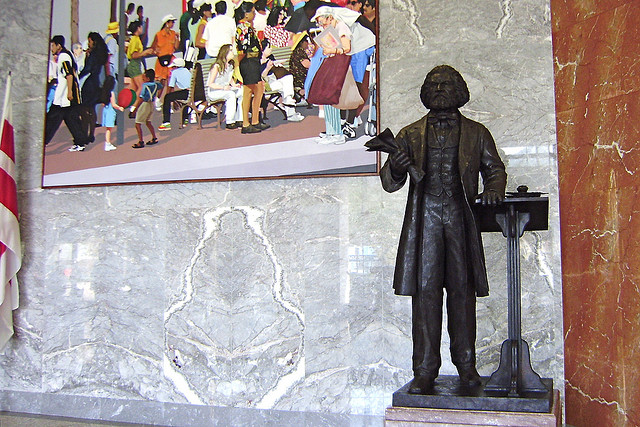
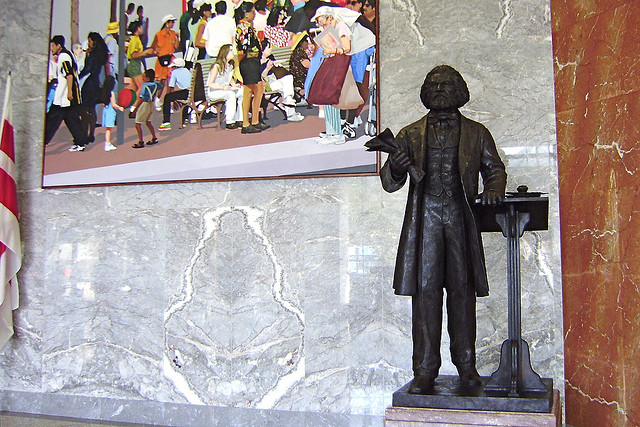 Photo by lreed76
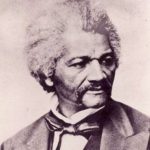
In a win for D.C., President Obama recently signed a bill that would bring a statue of famed abolitionist Frederick Douglass to the U.S. Capitol. But that he’ll finally stand there isn’t without a sense of historical irony: after his death in 1895, a bill that would have allowed him lay in state in the Capitol floundered amid controversy over how Douglass should be remembered in a city that still remained distinctly divided between black and white, even after the Emancipation Proclamation and end of the Civil War.
National Park Service Ranger Braden Paynter told me this as we stood at Douglass’ house in Historic Anacostia late yesterday afternoon; the southern Victorian mansion he bought in 1877 offers sweeping views of the Anacostia River, the Navy Yard, Capitol Hill, and the Washington Monument. The home, declared a federal historic site in 1988, the house remains an unknown gem—like the man who occupied it—in a town full of dramatic yet sterile marble memorials.
 Local journalist, historian and playwright John Muller wants that to change. And as a means to enlighten people both on Douglass and his home, he recently published Frederick Douglass in Washington, D.C.: The Lion of Anacostia, one of the first books that follows the life and times of the abolitionist after he moved to Washington from Rochester, N.Y. in 1872.
In the book, Muller dives into the complex and minute details of Douglass’ life in Washington—from his role as a newspaper publisher to public speaker and even the appointed U.S. Marshal for D.C., responsible for hunting down the very type of fugitive that he had once been. Muller also touches upon Douglass’ appointment as the D.C. Recorder of Deeds, and his service on the Board of Trustees of Howard University.
The book also touches upon the complexities of race relations in Reconstruction-era Washington, when slaves had been emancipated but segregation still remained. Muller tells of the death of Douglass’ wife in 1882, and his subsequent marriage to Helen Pitts, a white woman. The move shocked the city’s establishment—a Post reporter even asked him if it could compromise his position as a black leader—and showed the even the most ardent supporters of ending slavery still weren’t ready for what followed. (Paynter told me yesterday that Pitts’ parents, who were abolitionists, disowned her after the marriage.)
Muller’s book connects Douglass to the city and neighborhood the way no other project has yet been able to. In his epilogue, he explains that the research he did was motivated by his own questions during a visit to the Douglass house in 2010. In reading his book and visiting his home, you’re able to re-imagine the man and re-consider the possibilities of the place he once lived.
Muller will be reading from his book tomorrow at 1 p.m. in Politics and Prose (5015 Connecticut Avenue NW), on October 20 at 1:30 p.m. at the Martin Luther King, Jr. Memorial Library (901 G Street NW) and on October 27 at 2 p.m. at the Frederick Douglass National Historic Site, 1411 W Street SE.