Martin Austermuhle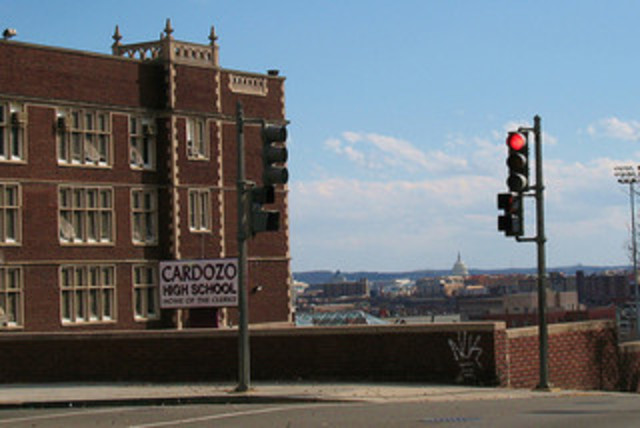
 Photo by Mr. T in DC
It’s something of an article of faith that D.C. schools have improved in recent years. Mayoral control was granted in 2007, Michelle Rhee (and now Kaya Henderson) fought with the teachers’ union to allow more flexibility in hiring and firing, enrollment stabilized, test scores have gone up marginally, and so on.
But a new report from the education advocacy group D.C. Kids Count throws that last claim into doubt, saying instead that third graders—both in public and public charter schools—showed few statistically significant gains in math and reading from 2007 to 2011:
Analysis of DC Comprehensive Assessment System (DC CAS) scores from 2007 to 2011 found no evidence of statistically significant changes in third grade math or reading proficiency at the citywide level, among traditional public schools or public charter schools, among racial and ethnic groups or by economic advantage or disadvantage.
Neighborhood-level analysis of 2011 third grade DC CAS reading and math scores showed wide variations in test performance among neighborhoods. The neighborhood analysis also indicated close correlations between aggregated proficiency in neighborhood schools and neighborhood economic indicators such as poverty and median family income.
Why focus on third-graders? Because, as the report states, “third grade is a turning point for many children…it is when they stop learning to read and start reading to learn.” Of course, some school advocates and city officials took issue with this element of the report, saying that high school students have been making big jumps in proficiency in recent years.
If this seems like a sobering reality check for parents-to-be, the report does contain some good news: the investments that D.C. has made in recent years in early childhood education are sure to pay dividends down the road. According to the report, for every dollar invested in high-quality early childhood programs, a $2-3 increase in per-capita earnings is seen over the long term.