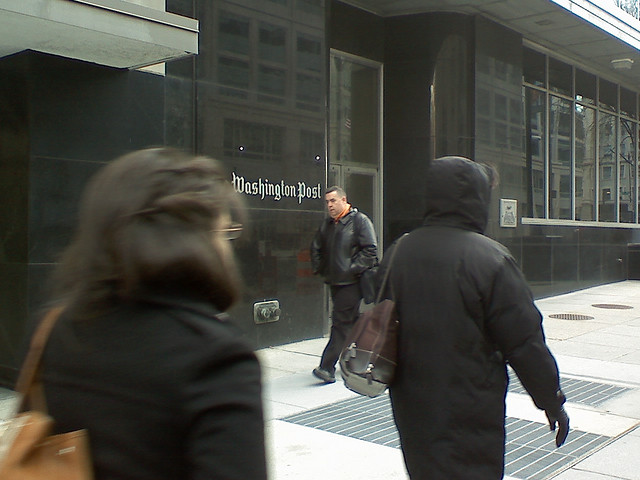
 Photo by Dan Macy
The Washington Post’s paywall will launch next Wednesday, the newspaper announced today. Over the next several weeks, groups of readers who read the Post primarily online will be phased in to the new metered subscription model, which will be available at two price levels. Kris Coratti, a spokeswoman for the newspaper,
After years of giving away all its content for free online, the Post will start charging for access to people who view more than 20 articles or multimedia presentations in a month. The barrier is similar to the paywall instituted in 2011 by The New York Times, and other publications that start charging readers after a certain limit of articles are viewed.
Unlimited access to the Post’s desktop and mobile websites will cost $9.99 per month. For $14.99 a month, readers can browse the websites as well as the Post’s mobile applications.
Certain groups of readers, including home delivery subscribers, will be exempted from having to pay for online access, including on mobile apps. Students, educators, government employees, and military personnel who read the Post from their schools or offices will receive unlimited website access for free.
Additionally, non-subscribing visitors who arrive on the Post’s website through search engines or social media links will not have those articles count against their monthly limit. Views of the Post’s home page and section fronts will not count as article views.
“Over the coming months, we will learn more about how everything is working, listen to your feedback and modify our model accordingly,” the Post’s publisher, Katharine Weymouth, writes in a letter to readers.
The Post itself reports that executives at The Washington Post Company were split over whether or not to raise the paywall, but that the argument that the paper needs more sources of revenue won out.
The Post’s average weekday circulation was 474,767 as of March 31, a 6.5 decline from last year’s figures. And while online display advertising at the Post increased 16 percent in the first quarter of 2012, print advertising revenues dropped by eight percent.