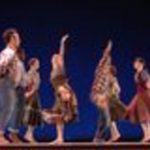
Toward the end of Fallbeil, German teenager Else rushes on stage in a tearful panic.
“I could really use a friend right now,” she sobs as she fruitlessly attempts to talk to the ghost of WWII German Resistance member Sophie Scholl.
This may sound like a move built from desperation, but it’s this human search for a connection in the midst of terrible pain and conflict that gives credence to the script’s magical realism and makes Fallbeil a compelling watch. The storyline isn’t quite the story of parallel lives over a seventy-year gap that the official show description would lead you to believe. The parallels between Sophie and Else lie more with their need for validation than the specifics of their difficult situations.
In this version of the Sophie Scholl story, she has not moved on to some other plane after her execution by guillotine (the titular fallbeil) but has remained on Earth as a specter with her brother Hans at her grave site. Primarily, Chelsey Christensen plays Scholl with the gravitas and wisdom of someone who has seen the Earth change through the decades, rather than the boldness of the 21-year-old that she was at the time of her death. This makes her questioning of her strong Christian faith at the play’s beginning, noted as one of Scholl’s defining character traits, a moment that gives the character more depth.
Else, on the other hand, played masterfully by Angie Tennant, is the play’s most multi-faceted character. We see her as a tough candid leather jacket-clad chick who irreverently refers to her Iraq War veteran brother as having “blown himself up” who ultimately cracks under the pressure of having to decide whether to take her comatose brother off of life support. Lest this sound like a complete downer of a play, Josh Adams adds levity with his portrayal of Else’s best friend Karl, a lovable dimwit who avoids portraying a stereotype as he too deals with the fate of Else’s brother.
During her brother’s time in the hospital, Else has been visiting the graveyard and talking to Sophie, with whom she can somehow see and communicate. The trust that they place in each other is somewhat misplaced, as neither Sophie nor Else can fully identify with the other’s plight, but perhaps that’s the play’s biggest asset. Rather than try to moralize on the subject of death, playwright Liz Maestri instead gives a greater window into its effect on the ones left behind. She doesn’t give us all the answers because neither she nor her characters have them. This is a showcase of talent beyond usual Fringe Festival fare and missing its remaining Saturday performance would be a mistake.
Remaining performance:
Saturday, July 27 at 7:45 p.m.
At Mountain – Mount Vernon United Methodist Church
Buy tickets here.