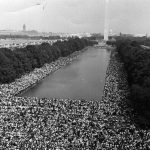
August 28, 2013 marks the 50th anniversary of the March on Washington for Jobs and Freedom. In addition to the commemorative rallies, concerts, and exhibits taking place this month, history professor William P. Jones will stop by D.C. to present his new book, The March on Washington: Jobs, Freedom, and the Forgotten History of Civil Rights (W.W. Norton, July 2013). Join the discussion at Busboys and Poets at 5th and K, 6:30 p.m. on Thursday, August 22.
Many probably recognize the March on Washington as occasion where Martin Luther King, Jr. gave his powerful “I Have a Dream” speech. As significant as the speech was and is, Jones wants Americans to know more. The march was an all-day event first proposed over twenty years earlier by another civil rights hero, A. Phillip Randolph. He was the first speaker at the rally, to a crowd that reached up to 300,000 people surrounding the Reflecting Pool.
President of the first predominantly black labor union and sometimes called “The Most Dangerous Negro in America,” Randolph envisioned a large-scale event that would call for equal treatment in employment and the military. The march had been delayed since the 1940s after President Roosevelt appeased Randolph with an executive order banning racist hiring practices in the defense industry. In 1963, focused on economic inequality and joblessness, Randolph sought balanced opportunity for African Americans to attain “education, housing, transportation and public accommodations.” The March on Washington was held 100 years after the Emancipation Proclamation was signed, and two months after President John F. Kennedy announced his civil rights legislation plans.
The March on Washington puts “I Have a Dream” into a larger framework of the civil rights movement leading up to the march. The book provides a background of the movement as Randolph and his peers experienced it, starting in the late nineteenth century. Jones recounts the rising popularity of “nonviolent direct action,” struggles against postwar employment discrimination, and the optimism and disappointments brought on by FDR’s administration.
Jones is a professor of history at the University of Wisconsin in Madison. He specializes in civil rights and labor history, and contributes to The Nation and other publications.
The talk takes place in the Cullen Room until about 8:30 p.m. and is free to the public.