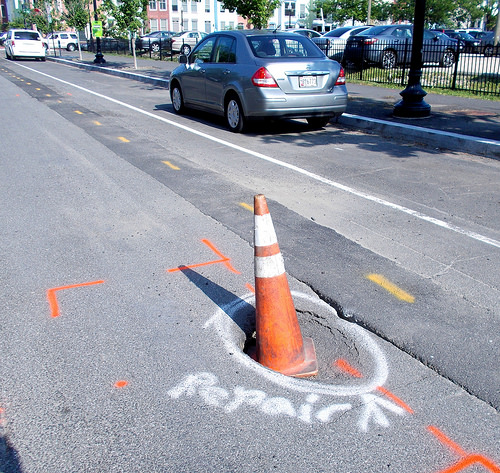
 Photo by armandlione.
A hearing on the condition of D.C.’s streets found Councilmember Mary Cheh seeking answers on the repair process and the D.C. Department of Transportation promising to look into many of her questions.
According to DDOT, 38 percent of D.C.’s local roads are in poor (24 percent), very poor (12 percent) or failed (2 percent) condition. Federal roads are in better condition. “Let’s be straight-forward here,” Cheh said. “Is this a good record?”
A lack of adequate funding for local roads for “many, many, many years,” one representative from the agency argued, played a role.
DDOT interim director Matthew Brown said the agency is committed to completing the fiscal year 2014 work plan, which, as of June 11, contained 1,335 requests for street and alley paving, sidewalk repair, crack sealing, slurry sealing and more. About 250 have been completed, while three are listed as pending.
“The goal is to optimize the resources we have,” Brown told Cheh.
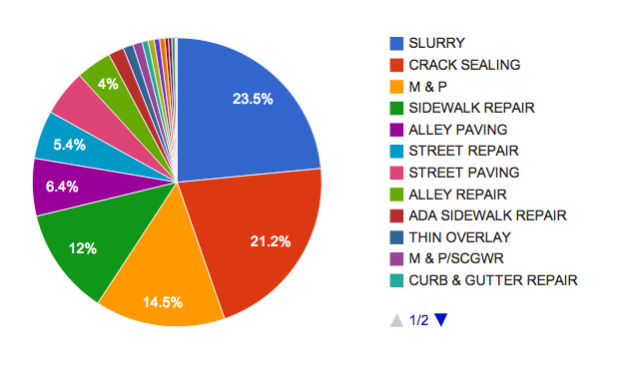 Via DDOT.
Cheh said she was not convinced that money was an issue, but noted that the fiscal year 2015 budget includes a 63 percent increase for road paving.
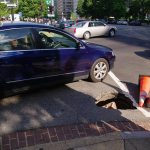
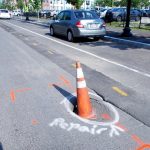
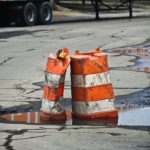
Of the many topics on the table, potholes were at the forefront after an especially harsh winter. DDOT officials said 51,000 potholes have been filled this year.
To look at it another way: AAA’s John Townsend said the company responded to 7,700 calls for flat tires in D.C. between December 2013 through May 2014. It’s unclear how many of these flats were caused by potholes.
When Cheh asked how pothole repairs are reviewed for quality, Katherine Jefferson, one of DDOT’s associate directors, said a supervisor “probably does that.” When pressed about quality control, Jefferson said the review is “probably not” done “as scientifically as it should be.”
When asked the average response time for filling potholes, DDOT officials were unable to provide that information. Unhappy that the agency did not have performance measures on hand, Cheh responded “But this is a hearing about potholes!” Brown later said that, in the 3rd quarter of this year, 82.5 percent of potholes were attended to within a 48-hour period.
Also at issue were 311 requests and how the agency responds to them. Brown said DDOT is evaluating how service requests for sidewalk repairs and sign issues are dealt with.
“It’s obviously my goal to improve the service of the agency,” he said.
Cheh read a letter from a constituent, who complained about a lack of communication and response to requests for service via phone and online. DDOT’s website also contains out-of-date information about projects, the letter writer said, according to Cheh.
“If they even approximate the reality, this is terrible,” Cheh said.
In an average year, Brown said DDOT receives 3,100 sidewalk/curb/gutter requests, 3,700 pothole requests and 1,500 street paving requests. If you think that tweeting at DDOT helps you cut in line, you’re wrong. Brown said requests made to DDOT’s Twitter handle — which he had to look up — are submitted to 311 by the agency’s communications department.
“Going forward, we’re working to provide more specific information on whether it’s a request that’s going to handled in the near-term or as part of a plan,” Brown said.
“So you’re aware there are problems?” Cheh said. “I am aware,” Brown replied.
Cheh also wanted to know if a District-wide assessment to review street and parking signs, which residents say can be confusing and conflicting, had started.
Jefferson said the assessment is being done in pieces. In residential areas, two interns have been collecting information for a “couple of months.” “For the whole District?” asked a clearly unhappy Cheh. “For the whole District,” Jefferson replied.
Field operation crews that are sent out to do repairs daily also collect information on signs and send this data to DDOT. About 15 people total make up these crews. Brown said an inventory of signs along evacuation routes has been completed, and a new 311 code for conflicting signs has been added.
“This is not a systematic, organized approach to [reviewing] signs,” Cheh said.
While a focus on sidewalks and signage requests is needed, Cheh said, streets must also be addressed. And while she didn’t get all the answers she sought at the hearing, Cheh seemed optimistic. “Improvements are on the way, both in communication and in the actual repairs,” Cheh said. Brown agreed.