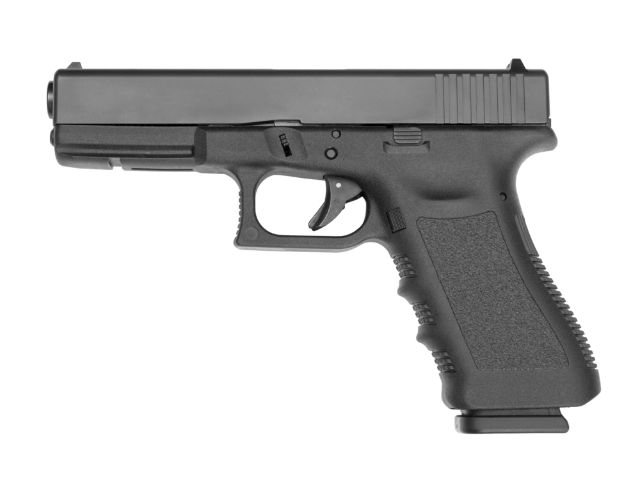
 Via Shutterstock.
D.C. residents would have to prove they have a “legitimate need” to carry a handgun in public in order to obtain a concealed carry permit license, under emergency legislation crafted in response to a court ruling.
Similar to the process in Maryland, licenses would be given to residents who can prove they have “good reason to fear injury to his or her person” or “any other proper reason for carrying a pistol.” They must also be a “suitable person to be licensed.” The applicant must complete a training program and establish that he hasn’t suffered from a mental illness or been a danger to himself in the past five years.
Metropolitan Police Department Chief Cathy Lanier will be given discretion to approve and deny applications, as she does now with gun registration permits. A five-person Concealed Pistol Licensing Review Board, appointed by the mayor, would review denied applications and revoked licenses.
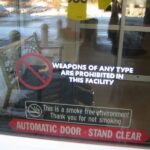
Carrying a handgun in public would be forbidden in “sensitive locations,” including government buildings, schools and premises where alcohol is sold and served. Concealed weapons would not be allowed within 1,000 feet of the movement of dignitaries, like motorcades. But gun carriers would only be penalized if they were made aware of the movement beforehand. Concealed guns would be forbidden in businesses for 90 days. After that, discretion would be given to the business owner.
At a press conference to announce the legislation, Gray called the ruling that struck down D.C.’s ban on carrying handguns in public an “unfortunate decision.” Council Chair Mendelson, who helped draft the legislation, said there’s “no question that the presence of additional guns puts additional stress on the Metropolitan Police Department and law enforcement particularly in the nation’s capital.”
He said the city had to find a “proper balance” between public safety and constitutional rights.
When asked what qualifies as a reason to need a concealed carry permit, D.C. Attorney General Irv said living in a high crime area would not be a valid reason. Victims of certain crimes would possibly qualify, he said.
The Council will consider the bill at its next legislative session Tuesday. If approved, the legislation would be in effect for 90 days.
The city has until October 22 to comply with the July ruling from Judge Frederick Scullin, which Councilmember Tommy Wells (D-Ward 6) said gives MPD enough time to draft regulations for the permitting process.
Nathan said the city is still waiting for a judge to rule on their motion to reconsider the original ruling. A federal judge will hear arguments on the motion on October 17. He said he expects the legislation will satisfy the requirements in the recent ruling.