The D.C. area will lead the East Coast in tidal floods, thanks to rising sea levels, by 2045, according to a new report.
The Union of Concerned Scientists released a report today, warning of the negative impact sea level rise, “driven primarily by global warming,” will have on our area.
“While global sea level rose roughly eight inches from 1880 to 2009, much higher rates have occurred along parts of the East Coast, including New York City (more than 17 inches since 1856), Baltimore (13 inches since 1902), and Boston (nearly 10 inches since 1921),” according to the UCS.
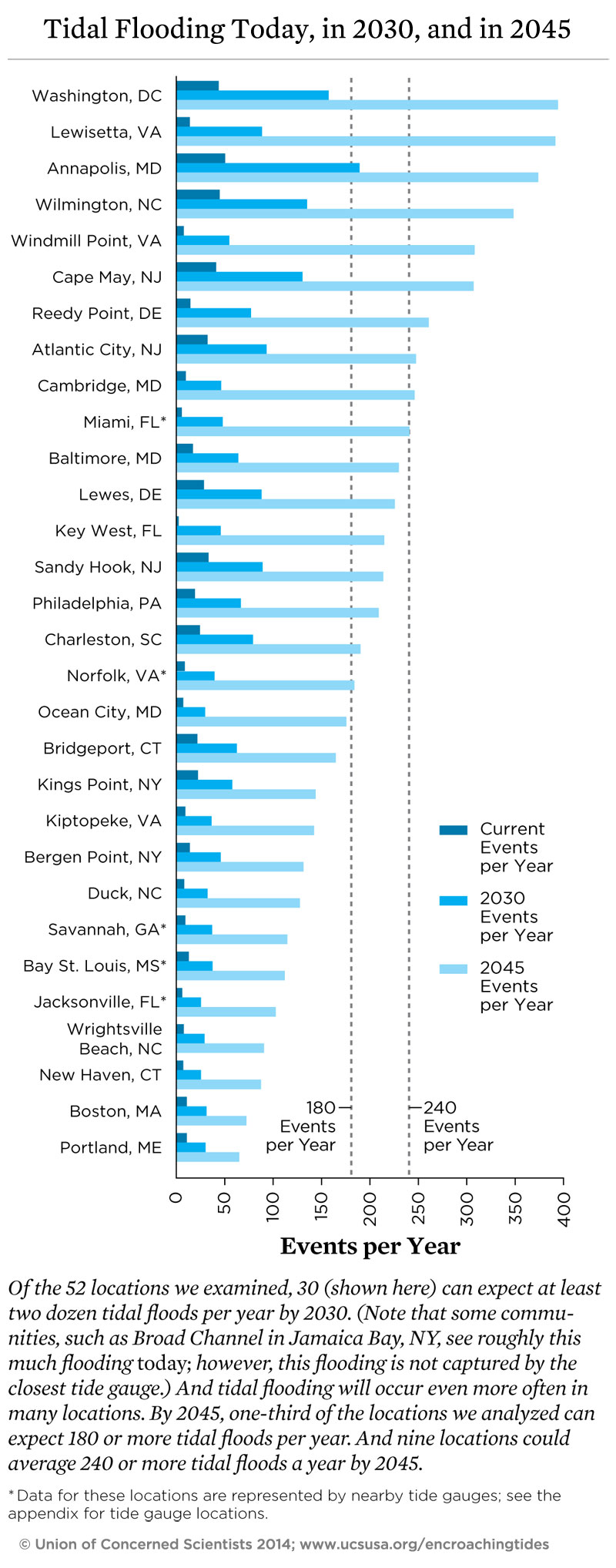
In its projection, UCS says the D.C. area can “expect to average 150 to 200 tidal floods each year” by 2030. That number could reach 240 by 2045. Today, the D.C. area sees an average of 43 tidal floods per year.
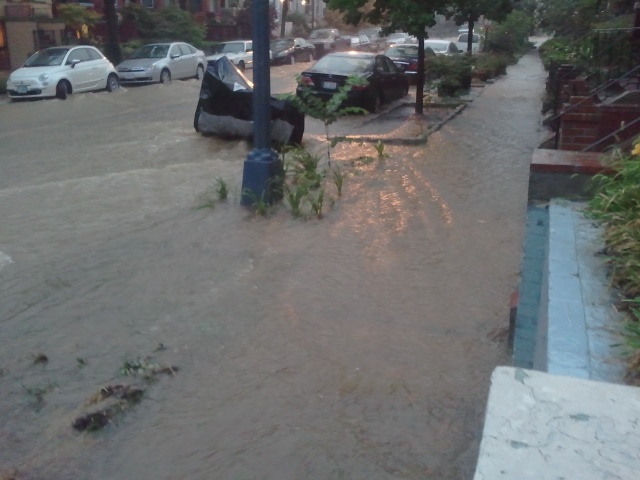
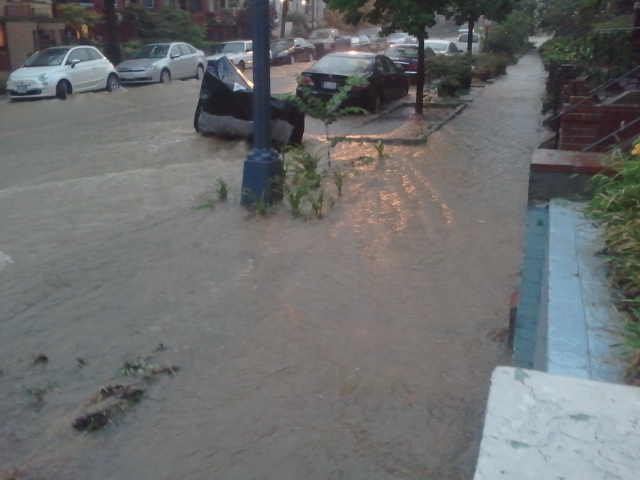
As they wind their way toward the Chesapeake Bay, the Potomac and Anacostia Rivers define the birders of Washington, D.C. and the many historic landmarks nearby, from Arlington National Cemetery to Old Town Alexandria, Va. Tides affect these rivers, and tidal flooding can produce effects ranging from patches of standing waters in parks to flooded roadways.
By 2045, Washington is projected to lead the East Coast in the number of tidal floods each year: it can expect nearly 400. These chronic floods will also be more extensive than the typical tidal floods today. Leaders of the nation’s capital have outfitted one of its assets — Washington Harbour — with a seawall to protect the area from flooding. Officials in nearby Alexandria are also considering options for mitigating today’s flooding problems, including installing flood barriers and raising roadways.
“Increased tidal flooding is essentially guaranteed,” UCS writes. “Changes already set in motion by our past and present heat-trapping emissions will largely drive the pace of sea level rise and flooding over the next several decades.
Municipalities, with state and federal help, should prioritize and incentivize flood-proofing of homes, neighborhoods, and key infrastructure; curtail development in areas subject to tidal flooding; consider the risks and benefits of adaptation measures such as sea walls and natural buffers; and develop long-term plans based on the best available science.
The costs and challenges, however, are too great for municipalities to shoulder alone. A coordinated, well-funded federal response is also needed and should include both substantial investments in coastal resilience building, as well as action to deeply and swiftly reduce global warming pollution. This latter action may ultimately be the only reliable way to protect coastal communities over the long term – by slowing the pace of future sea level rise.
There is a hard truth about adaptation, however. It has fundamental limits — whether physical, economic, or social — and it can only fend off the impacts of sea level rise to a point.
 Via Union of Concerned Scientists.