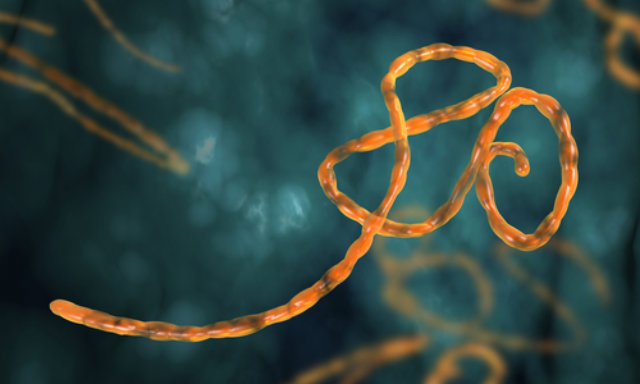
 Via Shutterstock.
More than 4,000 people have died from Ebola so far—mostly in the West Africa region—but that number could have been a lot less had budget cuts to the National Institute of Health not have slowed down production on a vaccine for the deadly virus.
Speaking with The Huffington Post, NIH director Dr. Francis Collins said that budget cuts and “stagnant spending” has significantly slowed down the potential to find a vaccine to treat the virus.
“NIH has been working on Ebola vaccines since 2001. It’s not like we suddenly woke up and thought, ‘Oh my gosh, we should have something ready here,'” Collins said. “Frankly, if we had not gone through our 10-year slide in research support, we probably would have had a vaccine in time for this that would’ve gone through clinical trials and would have been ready.”
Additionally, Collins said that some “therapeutics” to fight the disease “were on a slower track than would’ve been ideal, or that would have happened if we had been on a stable research support trajectory.” The NIH would’ve been “a year or two ahead” of where they are now in terms of Ebola vaccine research and production, had they been on the right schedule.
Last month, the NIH began fast-tracking research for a potential vaccine, with start of human testing. The results of Phase I of that vaccine is expected to be released in late 2014, and, if that goes well, experts say patients in West Africa could start receiving treatment sometime next year.
Right now, given the resources and budget they have, Collins says that a best-case scenario for Ebola treatment would be “for a clinical trial to start in December,” and it wouldn’t be until February or March for them to know if the vaccine worked.
But since the Ebola outbreak, the NIH hasn’t received any additional funding to help fight Ebola, instead redirecting money that would be spent elsewhere—like on influenza vaccines—to help with Ebola research. Collins told HuffPo that he’d like Congress to pass emergency legislation to give them additional funds, but that “nobody seems enthusiastic” about it.
There is legislation some lawmakers have introduced to increase NIH’s budget to $46.2 billion in 2021, HuffPo reports, but it doesn’t look like there’s much support for it.
In the meantime, Collins warns Americans to not freak out about the possibility they’d catch Ebola:
“Certainly there’s been a lot of fear [in the] response from people who are probably at essentially zero risk, that this might somehow take over our country, which is really not going to happen,” said Collins. “And despite all the assurances … it still hasn’t quite sunk in. There’s still the cable news people who are whipping this up, and frankly sometimes using it for political purposes to sort of shoot at the government.”