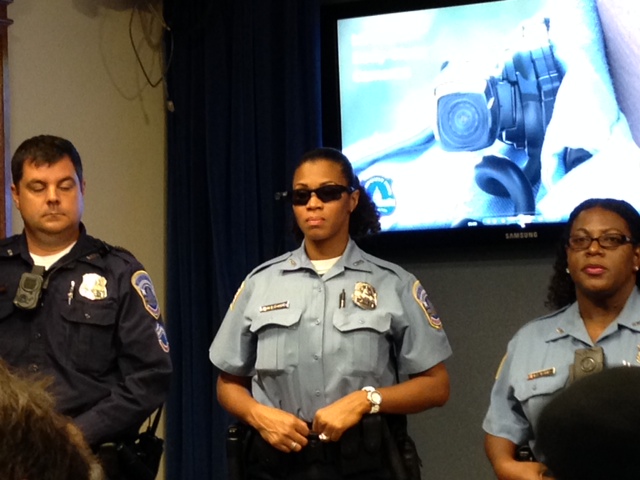
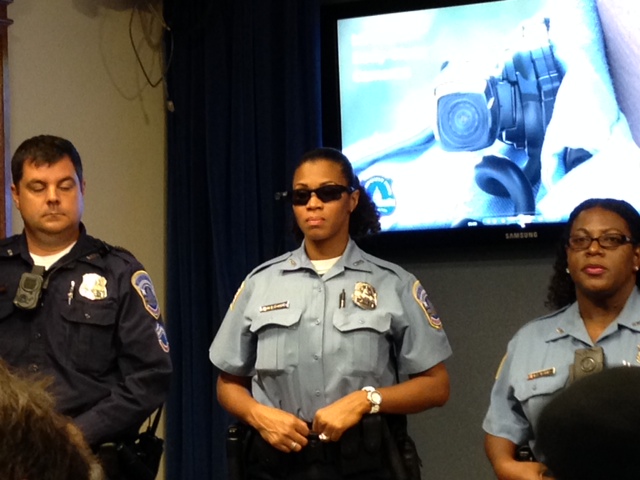
 Photo by Matt Cohen.
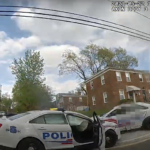
In a shift in policy, Mayor Muriel Bowser will allow the public to obtain much of the footage recorded by body cameras worn by D.C. police officers, the Washington Post reported.
Under Mayor Vincent Gray, Police Chief Cathy Lanier implemented a pilot program last October, equipping 165 police officers with five models of body-worn cameras over a six-month trial period. In her State of the District address, Bowser announced the pilot’s expansion to all MPD patrol officers over an 18 month period.
But many advocates for body cameras insisted that wearing them isn’t enough, and the public needed access to the footage for the program to be effective. “A blanket FOIA exemption is one more tool to surveil the residents of the District of Columbia,” the ACLU said at the time. Council member Kenyan McDuffie (D-Ward 5), who also strongly opposed shielding the footage, moved to slash funding for the full roll-out until the administration worked out a disclosure policy.
While Bowser initially fought to make the recordings exempt from Freedom of Information Act requests, she said a change of heart has stemmed from continued police shootings. A woman was shot by a police officer Saturday after refusing orders to drop a knife.
“Earlier this year, I proposed putting D.C. at the razor’s edge of body worn camera implementation—and despite numerous hurdles that’s exactly what we are poised to do,” said Bowser, in a statement to the Post. “Nationally, we have all seen too many instances where video footage proved to be invaluable. That’s why we are committed to providing every patrol officer with a camera.”
The new plan will allow access to footage of officers interacting with people in outdoor spaces, including on street corners and during traffic stops. Citing privacy concerns, the city has stipulations around releasing video recorded indoors and will generally restrict access to court proceedings. All footage in cases of domestic violence or sexual assault will be withheld, regardless of where it was recorded.