 Rachel Sadon
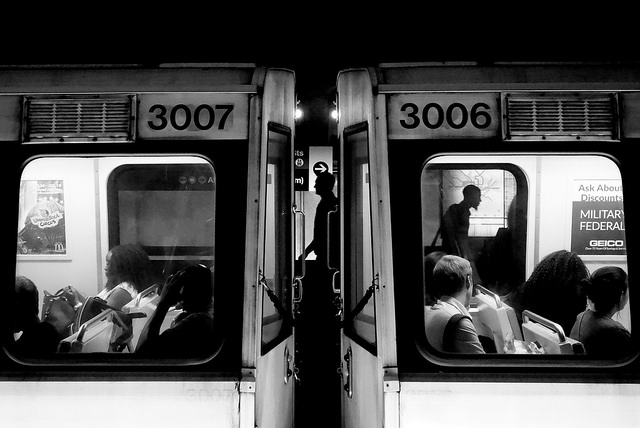 Photo by Jordan Barab.
One of Metro’s most vocal and relentless critics wants other riders’ voices to be heard. After five years of tweeting, retweeting, and responding to disgruntled passengers through the FixWMATA blog and Twitter account, Chris Barnes is working to form a riders’ union.
“Right now, everyone is clenching their teeth and screaming into a void at the same time. We want to get riders involved,” Barnes says of the nascent union that he is organizing along with business analyst Roger Bowles and transit consultant Ashley Robbins.
The union is something that they have been pondering for a while. Barnes said that he was planning to wait until October to launch, but a Washington Post article that ran yesterday about the bumbling search for a new general manager put him over the edge. “It covered a lot of bases. But instead of getting the rider point of view, they went to a think tank,” Barnes says. “The Post completely ignored the riders’ side of the conversation, which is what we see over and over again.”
He hopes that the union will become the place where reporters turn to get comment and reactions from riders. Barnes also wants it to be a mechanism to organize the people who rely on Metrorail, Metrobus, and MetroAccess. A boycott of the transit system is all but impossible, he realizes, but the union could get concerned riders to show up at meetings of the board or the Riders Advisory Council. Sometimes that might mean bringing signs, but it’s meant to be more about getting riders involved than rabble rousing. To keep it accessible to everyone, there won’t be any dues.
Pretty much everything else is still in the air. The organizers want it to be a democratic process and they will work together with interested riders to figure out the structure of the group. “This is not FixWMATA. This isn’t me. This is a separate group,” Barnes says. “I will continue to be my angry self on Twitter.”
Within just a few hours of launching this morning, more than 300 people began following the @WMATARU Twitter account and more than 20 have signed up to learn more. The interest is certainly a testament to how fed up riders are. But it also reflects the years of work that have made Barnes’s @FixWMATA, along with @unsuckdcmetro, the unofficial nerve centers for complaints, observations, rants, stories, and updates about Metro.
That notoriety has gotten Barnes blocked from following WMATA and targeted for investigation by a PR firm hired by Metro in the wake of January’s fatal smoke incident. “They let me in the building, but that’s about it,” he says of his relationship with Metro. “I’d love to have a better relationship with WMATA, but they don’t seem interested.”
Only time will tell if Metro will be willing to listen to a union organized by one of their fiercest critics (Metro hasn’t returned a request for comment, but we will update this if they do), but Barnes says it was only a matter of time before somebody did something.
He tried something like this once before with the advisory group MetroTAG. It got off to a good start, Barnes says, but the reach was too broad—the group was meant to represent all of the region’s transit riders, including VRE and MARC. WMATA Riders’ Union will stick to, well, WMATA.
Meanwhile, the Riders Advisory Council, he argues, is too beholden to WMATA because the group reports to the agency. “They’re basically a focus group,” he says. They will be the first to tell you that they don’t represent riders, they are a representative group of riders.”
So Barnes, Bowles, and Robbins turned to a model that has been implemented by public transportation users in San Francisco and Seattle, among other places. They have begun gauging interest and answering questions about the plan on a new website. The response thus far has been “fantastic,” Barnes says.
“[The Union ]won’t come about tomorrow, but in the coming months,” he says. “We want to make sure we do this right.”