 (Wood Powell, courtesy of the Goethe)
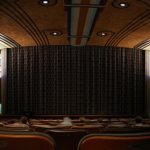
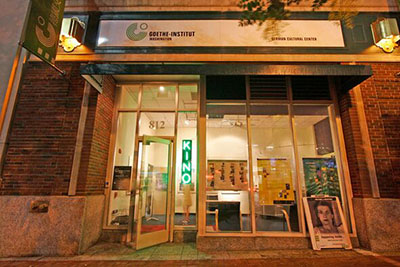
Next week the Goethe Institut will bid farewell to its Seventh Street auditorium with a screening of director Wim Wenders’ masterful 3D movie Pina. The intimate theater, with its state-of-the-art projection, has been one of my favorite places in town to see a movie. But as the real estate market on the busy corridor changes, the cultural institution will be leaving behind a neighborhood whose successful growth was ushered in by its own pioneering spirit.
Seventh Street Northwest has undergone numerous changes over the decades, from furniture district to arts district to neglected wasteland. Once home to much beloved and much missed venues like d.c. space and the Lansburgh (back when it hosted punk shows instead of Shakespeare), the area fell into disrepair. When the Goethe moved into its Seventh Street home in 1996, it was among the first to see its potential; the MCI Center (now the Verizon Center) was yet a year away from opening down the street. The revitalization of the area in the ’90s was anchored by the Goethe and the Lansburgh Theatre (which opened in 1992), and included a thriving gallery scene that included Civilian, Touchstone, and Zenith—all of whom have since moved on.
With Seventh Street morphed into a kind of Lilliputian Time Square, the corridor is set to change again. With that change goes the Goethe, forced to vacate its offices for temporary space on K Street. Unfortunately, the Goethe will not be able to resume film programming at these temporary spaces. But the K Street offices do feature limited exhibition space and expanded facilities for the Goethe’s popular language programs.
The Goethe opened its first Washington offices in 1990, near DuPont Circle. Cultural programs coordinator Sylvia Blume told me, “Chinatown was very different when we moved here. We started in an area where there were a lot of think tanks, and people asked, ‘why do you want to move away from that?’ It was rough here in the beginning. Many stores were closed.”
Director Wilfred Eckstein is hopeful that the organization can find a space that will be convenient for their language students. “We feel we are bound to the triangle between Dupont Circle, Metro Center, and Union Station for people who come to evening classes. It will be a challenge.“
Despite the lack of a performing arts venue at the temporary space, arts programming will live on thanks to partnerships with other local institutions. Next spring, in conjunction with U Street’s Spooky Action Theater Company, the Goethe will present a four-week run of “Happy Hour,” an interactive performance created by German theater company Machina Ex.
The Goethe hopes to relocate to a permanent space in 2019. Be sure to visit the temporary space at 1990 K St NW (entrance on 20th Street) in January 2016.