 Rachel Sadon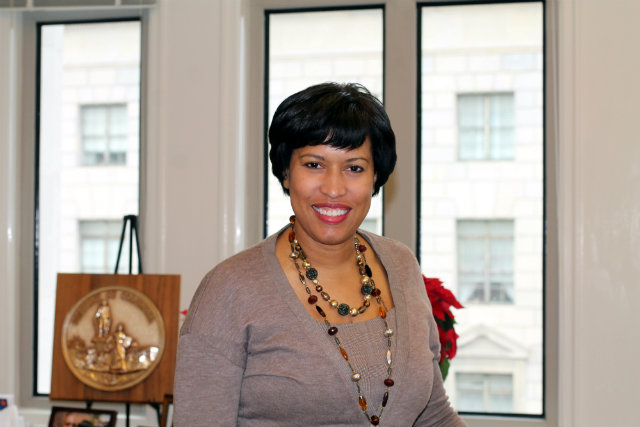
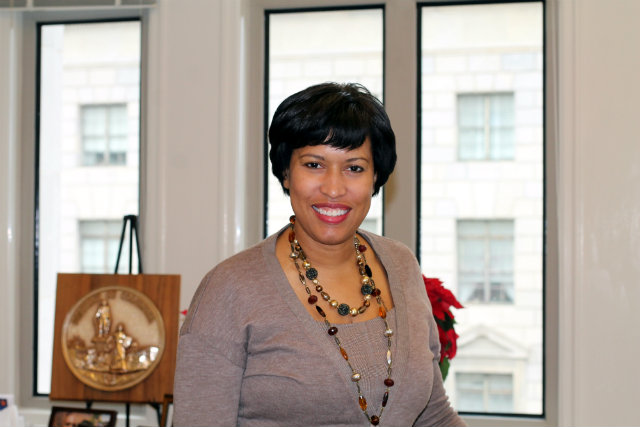 (Photo by Rachel Sadon)
For her first nine months in office, things were going swimmingly for Mayor Muriel Bowser.
Her picks for two Council seats won an April special election, the majority of the city cheered her on as she stood up to Congressional threats and moved forward with marijuana legalization, and she’s made strides toward improving homeless services. Meanwhile, rancor on the D.C. Council has been at a minimum; in May, the Washington City Paper headlined a post “On Budget, Bowser and Mendelson Can’t Agree to Disagree.” Her approval rating in early November was at 58 percent, according to a Washington Post poll.
But the last few months have been peppered with some notable road bumps that came to a head last week. WAMU reported that Exelon hired the then-head of a pro-Bowser political action committee to lobby the administration—despite the fact that he had no prior lobbying experience. With that news, activists who have been fiercely opposing the Pepco-Exelon merger and those who accuse the administration of fostering a “pay-to-play” culture found their complaints merging.
In a wide-ranging interview this week, Bowser was dismissive of the idea that any impropriety occurred—and said that she didn’t know that the former chairman, Earl Horton, had been hired until it was reported by the media last week.
“I never make decisions that are impacted by whether it is a contributor to FreshPAC or anybody who’s contributed to any one of my four campaigns,” Bowser told DCist. “The reason why there has been a hard pivot away from the FreshPAC is that we want to remove any question about how we make decisions.”
In the coming year, Bowser said she plans to continue focusing on affordable housing, working toward closing D.C. General, and improving the city’s job training programs, among others.
Bowser expressed pride in the city’s strong protections for pregnant women and the landmark paid sick leave law—which, she noted, didn’t tank the economy as the business community direly predicted at the time. But she stopped well short of endorsing the proposed D.C. Family and Medical Leave Act.
“I think that there’s still a lot of work to do. The Council has laid out what I think is the proper course in evaluating it,” Bowser said of the law, which would guarantee the most parental leave in the country. “I’m looking forward to see what they come up with.”
The mayor was also deeply skeptical of the ballot initiative to raise the minimum wage to $15 an hour. “Let me just put it this way: If it gets on the ballot, it wouldn’t affect the federal government or the D.C. government. That doesn’t sound right to me,” Bowser said.
Through it all, though, she’s loving the job. “I’m glad that I’m the one that’s sitting in the chair.”
Read the full interview, which has been lightly edited for length and clarity.
DCist: It’s been nearly a year since you took office. How are you feeling?
Mayor Muriel Bowser: We feel strong. We feel very good about the direction the city is moving in. We spent this year really laying the groundwork for keeping the promises that we made. We feel very good energy and support across the city for the big issues that people sent us down here to work on—for affordable housing, for really ensuring that more Washingtonians can participate in the prosperity of Washington.
DCist: Is there anything you would have done differently from this past year?
MB: I’m sure there are tons of things to do differently. But one thing that is clear to me: In big cities, I learned early on that anything can happen and an administration has to be nimble and prepared to deal with anything that comes our way—be it snow or an emergency on Metro or political assault from the Congress. But you also have to pivot quickly back to your agenda.
DCist: But is there anything specific that you might do differently in the year ahead?
MB: We are very focused on some of the areas that haven’t moved as quickly as we’d hoped, like $100 million in spending on job training and workforce development. We feel like we’re putting the pieces in place but there’s still a lot to do [the city’s programs are so dysfunctional that the Labor Department has labeled the District a “high-risk” partner].
DCist: Would you say that’s on your list of priorities for the new year?
MB: It’s been on our list of priorities. We’ve been working on it, and we have had some successes. We added a thousand summer jobs, for example, for the critical population of 22 to 24-year-olds. We’ve gotten our L.E.A.P. program off, which is training folks who have had tremendous obstacles to employment to get existing vacancies across the government. We got funded this year as part of our Safer, Stronger package for another 400 year-round jobs that will help people who have had more obstacles to employment get employed. When we came into office we were already on a kind of watchlist from the federal government. I think we have the ability to turn that around.
DCist: D.C. already has some of the strongest protections in the country for pregnant women, and the D.C. Council is now considering legislation that goes well beyond any state in regard to paid family leave. I know they are still studying the fiscal ramifications of the bill, but you haven’t said a lot about it so far publicly. Now that there’s been a bit of time to take a look at the proposal—are you supportive?
MB: There hasn’t been a lot in the way of the impacts of the proposal. As you say, we already have pretty robust leave allowances for the D.C. government, including 8 weeks of paid leave. We frankly are trying to get a hold of the impact of the 8 week program on D.C. government services. So, I think that there’s still a lot of work to do. The Council has laid out what I think is the proper course in evaluating it: hearing from experts, hearing from the business community, and hearing from advocates so I’m looking forward to see what they come up with.
DCist: But is expanding paid medical and family leave something you’re in general supportive of?
MB: Recognize that when we had no paid sick leave in the District, that I cast a crucial vote.
DCist: I remember.
MB: You do? Oh wow, nobody remembers that. I’m impressed; I have to remind people all the time. The business community opposed it, but guess what? It hasn’t tanked our economy.
But it was also thoughtful. It was iterated; it had an impact depending on the size of your business. I was also supportive of raising the minimum wage [the Council passed a bill in 2013 that has been gradually increasing the minimum wage until it reaches $11.50 in 2016; it will be tied to the average increase in the Consumer Price Index starting in 2017], which was also thoughtful and iterated over several years and in tandem with at least two of our surrounding jurisdictions. So I think that it is important in the position where I am—especially where I’m trying to get businesses to come to Washington, and we need businesses to move here—is that we have to remain competitive. We have to remain fair and balanced. We’ve been able to lower taxes in some cases, which is helping us when we go out to sell Washington to the corporate world. But we also believe in pathways to the middle class, and for a family to be able to count on income when they have a baby or other medical issues is important.
DCist: Activists for a $15 minimum wage are also currently fighting the D.C. Chamber of Commerce to get it on the ballot. If it makes it on there, would you vote for it?
MB: I don’t know that it is going to get on the ballot, so I’m going to see about that. I think the Council actually went through the right process in raising the wage that has not put the District at a competitive disadvantage. The bottom line is this though: we need good paying jobs in Washington, D.C. to be able to afford to live here. We just need to be very thoughtful about how we get there.
DCist: You say the Council went about it ‘the right way.’ Does that imply that this way is wrong?
MB: Let me just put it this way: If it gets on the ballot, it wouldn’t affect the federal government or the D.C. government. That doesn’t sound right to me.
DCist: So, pot is legal now (which was also a high-profile ballot initiative).
MB: Yes, small amounts for adults in their homes—home use.
DCist: Did you ever think you’d see that day while you were in office?
MB: Um, actually I did. Even in the time that I’ve been in elected office, we’ve seen some pretty seismic changes. What I didn’t think that we would see is legal gay marriage. When I was first running for office nobody thought—and I was always a supporter—but I couldn’t see how the political winds would change such that a Council of the District of Columbia would legalize same sex marriage. We’ve seen the same with marijuana; you see it in the electorate. It’s for the best. This is a city that is inclusive. We want to be inclusive, we want to be at the forefront of making sure that our LGBT rights are second to none in our nation, and I think we’ve accomplished that. But we also have seen that our marijuana laws were not only out of step with what Washingtonians think, they just didn’t make sense in our criminal justice system. Now I hope that we’ll continue to see that kind of shift in thinking when it comes to statehood for the District of Columbia
DCist: But many activists say that the proposed permanent ban on pot clubs also doesn’t makes sense, that it creates barriers for many of the people that legalization was meant to help—sick people who can’t smoke in houses that they rent or those who live in federally subsidized housing. But you’ve been a steadfast proponent of that legislation. Why?
MB: We’ve achieved a pretty good balance, where you have neighborhoods that support the law. We haven’t really seen any real pushback about the current state of the law.
DCist: What’s the issue with the neighborhood bar if they want to allow pot smoking on their back patio?
MB: That would require a whole other level of regulation that I don’t think we have the apparatus to support. The next kind of regulatory hurdle that we need to get over is how we’re going to tax and regulate marijuana.
DCist: And how are we going to get over that, though?
MB: It’s not clear. We don’t have a clear path right now [Congress continued this year to block spending]. We’re constantly kind of churning that. I think you know it’s not just a regulatory issues it’s a bigger political one that is part of a larger agenda.
DCist: Good luck.
MB: Thank you.
DCist: You committed $100 million to the Housing Production Trust Fund to create more affordable housing, it was a major commitment. But activists say it isn’t enough.
MB: Well I could have told you that.
DCist: What else should the city be doing?
MB: We need to continue to invest at least $100 million a year, it could be more. I think we’re seeing that we’re growing the capacity to actually spend more. If the private development community knows that the city will be there to close gaps, then they can gear up to get ready to help spend additional money. I think we’re demonstrating that.
We need to do more around preservation. That’s why I created what I’m calling the preservation strike force. We know that over the next 10 years, there are around 13,000 units that will have expiring tax credits. We really need to think about another source to help us protect those units, and we’re focused on that. We’re also focused on how we’re going to preserve public housing units; we have 8,000 of those. It’s true there’s not enough money. We’re growing the capacity to spend more money and we need to be creative about how we get private money in to leverage the $100 million that the District spends.
DCist: What’s happening with the old Hebrew Home in Columbia Heights? There was this huge public process last year about how to repurpose the vacant building—a survey, multiple public meetings; the Housing Authority announced a plan; and then nobody heard anything for a year. What happened?
MB: We are probably going to change the input and solicitation process on—and we don’t call it that anymore. It’s 1125 Spring Road.
DCist: But pushing this to the Office of the Deputy Mayor for Planning and Economic Development has added at least another year and a half to the process. And residents say they are frustrated at how long it has already taken.
MB: I agree that it’s taken too long. But we found that we can’t do it the way that it was envisioned as having the Housing Authority use their entity. I don’t want to misremember some of the technical points. But it still has to be surplused; we can’t just have them do it for us.
DCist: So it’s a legal issue?
MB: It’s a legal issue.
DCist: Let’s talk about the recent news that Exelon hired the then-head of FreshPAC, Earl “Chico” Horton III, to lobby the administration. In an editorial, the Post called it “legal, but unseemly,” writing “Unless Ms. Bowser wants her otherwise promising start in office tarnished, she should provide information that shows exactly how decisions were reached and make clear she understands why the arrangement was problematic.” What was your relationship to FreshPAC at the time, and when did you find out that Exelon had hired the chairman? Do you think the arrangement was problematic?
MB: I don’t have anything to do with who Exelon hires.
DCist: When did you find out that Exelon hired him?
MB: I knew that he was a registered lobbyist when it was reported.
DCist: So just last week?
MB: I knew he was a registered lobbyist when it was reported.
DCist: To the city or reported in the press [Horton filed with D.C.’s Board of Ethics and Government Accountability on September 29, but it wasn’t reported in the press until WAMU broke the story on December 16]?
MB: I would have no way of knowing if it was reported—I don’t follow the lobbying reports. I don’t know who all the registered lobbyists are.
DCist: So you learned that he had taken on that job when the media reported it?
MB: I knew he was a registered lobbyist when the media reported it.
DCist: So it was only last week.
MB: You asked me that already [laughs]
DCist: I just don’t want to misreport anything here.
MB: I learned that he was a registered lobbyist when the media reported it.
DCist: Last week.
MB: Yes.
DCist: Do you think that the arrangement was problematic?
MB: I think there will be people who disagree with Pepco-Exelon and my decision around Pepco-Exelon who will find all kinds of reasons make it the wrong decision. We feel very strongly that the settlement that we achieved is the best out of all of the states and puts the District of Columbia in the best situation moving forward.
DCist: But I’m talking specifically about a case in which a political action committee that is raising money essentially on your behalf, in support of your administration … …
MB: Well, first of all I think you know the FreshPAC is defunct or on the way to being defunct, so it’s not doing anything on my behalf.
DCist: Yes, but at the time it was. I’m curious if you think that it was appropriate that the head of FreshPAC at the time was lobbying the administration on behalf of a company with … …
MB: Many people have lobbied the administration as it relates to Pepco-Exelon, as I’m sure you imagine. Any big corporation anywhere in the United States wants to get its point across. So be clear about this: I never make decisions that are impacted by whether its a contributor to FreshPAC or anybody who’s contributed to any one of my four campaigns. All of my decisions are based on what I think is best for the residents of the District of Columbia and this one is no different. So when you look at this deal—which has affordability requirements for residents, including a break on any increases, investments in sustainability, and investments in a more reliable system—we think it can’t be questioned.
DCist: I understand you’re defending your personal integrity, but does it look bad for this to come to light—especially in a city which has had a long history of ethics issues?
MB: I don’t think anything was hidden about it. Certainly the reasons why you’re asking questions about it is because Mr. Horton filed and disclosed as the law requires. So the reason why there has been a hard pivot away from the FreshPAC is that we want to remove any question about how we make decisions. Now certainly every governor, every federal official has a PAC. So this notion that PACs are something unique, it bewilders me a little bit.
DCist: But it was unique that there was no contribution limit because it was a non-election year.
MB: Well, the PAC itself limited the contribution. It was limited.
DCist: Our time is running out, so a couple of final things: Should the streetcar still be expanded?
MB: Yes, at least to Benning Road and a more logical place to the west. But we don’t have on the table the billion dollar funding.
DCist: Does Vince Gray deserve an apology from anybody?
MB: I don’t have anything to say about that.
DCist: What are you most looking forward to next year?
MB: We’re looking forward to pushing our agenda, affordable housing, being able to get a plan approved that closes D.C. General and new schools. We’re going to be opening Roosevelt High School and our school at Ron Brown that’s focused on improving outcomes for boys. We’re very much looking forward to that. Also, advancing some of our bigger economic development projects, including the Wizards stadium and Mystics stadium. That’s going to kick off St. Elizabeths for Ward 8, which is a tremendous opportunity. So there’s a lot that we’re really looking forward to.
DCist: And you’re enjoying the job?
MB: I love it. I feel very good about it, but this job comes with huge responsibilities. I take it very seriously that the decisions that we make not only affect Washingtonians right now but will affect Washingtonians for the next 50 years. So I am very proud to have that opportunity. Sometimes people say when we’re dealing with something tough, ‘how are you doing, you ok.’ But I’m glad that I’m the one that’s sitting in the chair. Because I feel that I approach the issues, and we’re doing the things we do, for the right reasons.