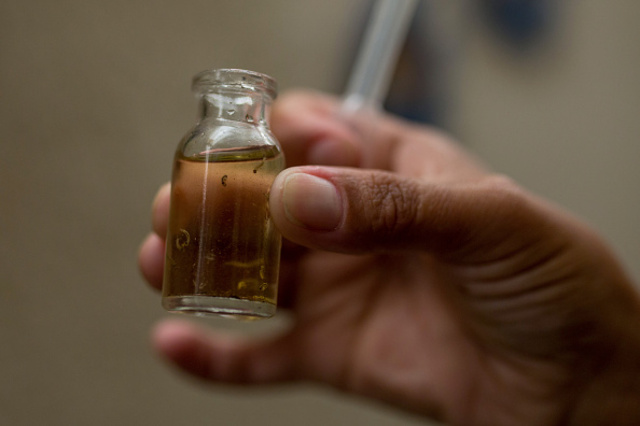
 Photos by Victor Moriyama/Getty Images
Update:
On February 2, the Center for Disease Control and Prevention confirmed that the Zika virus was sexually transmitted in Texas, CNN reported. The case involves a patient who had sex with a partner who’d recently returned from Venezuela and was infected with the virus. The CDC stressed that the woman was not pregnant and told CNN that it will soon provide guidance on sexual transmission, with a “focus on the male sexual partners of women who are or who may be pregnant.” And in the meantime, sexual partners should protect themselves by using condoms.
Original:
D.C.’s Department of Health is distributing a fact sheet with everything District residents need to know about the Zika Virus after the World Health Organization declared a “public health emergency of international concern” yesterday.
The good news is, thus far, severe disease as a result of the virus is rare and no deaths have been reported, according to the fact sheet. The more unsettling news is that some Zika-infected women have given birth to babies who have microcephaly—a defect in which the baby’s head is smaller than expected, and WHO strongly suspects a causal link.
Plus, WHO estimates that the virus will infect up to 4 million people by the end of the year in this hemisphere.
Last May, the Pan American Health Organization issued an alert about the first confirmed Zika virus infections in Brazil. Officials estimate the number of Brazilian cases to be as many as 1.5 million. Since then, outbreaks have occurred in more than two dozen countries. While no locally transmitted Zika cases have been reported in the U.S., cases have been reported in returning travelers, according to the Center for Disease Control and Prevention.
The College of William and Mary in Williamsburg, Va., last week, announced that a student was infected with Zika while traveling in Central America during winter break. He is expected to make a full recovery, and was not experiencing any symptoms at the time of the press release, the university said.
Another Virginian tested positive for Zika after traveling abroad. “Because it is not mosquito season in Virginia, this individual with Zika virus infection poses no risk to other Virginians,” Virginia Health Commissioner Dr. Marissa Levine said in a statement.
While the most common way to contract the virus is from the bite of an infected mosquito, there have been a few reports of Zika being spread through blood transfusion and sexual contact (all of these reports are under investigation), according to the fact sheet. Here’s some other important information that the document provides.
Who can get the virus?
Anyone. However, (as previously mentioned) everyone who has the virus in U.S. contracted it while traveling in countries where there is an active and ongoing spread—primarily in Central and South America, Mexico, and the Caribbean.
How do you know if you have it?
The most common symptoms are fever, rash, joint pain, or red eyes. Other symptoms include muscle pain and headache. Also, only 20 percent of people with the virus show symptoms—that’s about 1 in 5 people.
While the amount of time between exposure and signs of the virus is unknown, it’s likely to be a few days to one week. And once symptoms come, they usually last for several days to a week.
Is there a vaccine or specific treatment?
No, unfortunately not. Treatment is “supportive and based on a patient’s clinical condition,” according to the document. Also, remedies like aspirin are a no go “until dengue can be ruled out to reduce the risk of bleeding.”
At the moment, testing is only performed by the Centers for Disease Control and Prevention. So if you think you’ve been affected, you have to ask your health care provider for guidance in connecting with the CDC.
How can people protect themselves?
If you’re traveling to infected sites, you should wear long-sleeved shirts and long pants, stay in places with air conditioning or that use window and door screen to keep mosquitos out, and sleep under a mosquito bed net, among other things. Go here for the latest travel notice information. Also, pregnant women should avoid traveling to affected areas altogether.