Rachel Kurzius
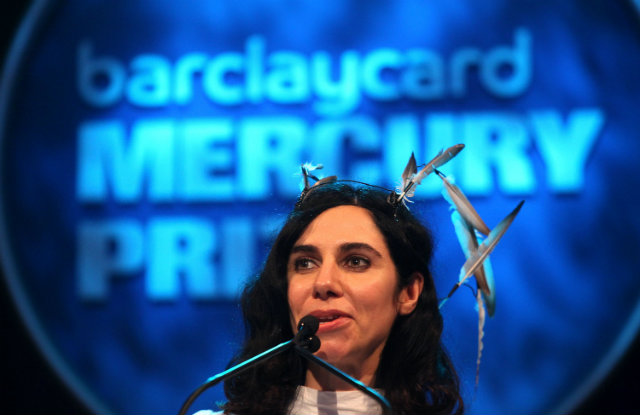 Photo by Tim Whitby/Getty Images.
Updated with comment from Councilmember Yvette Alexander.
British songwriter and poet PJ Harvey’s travels to Washington D.C. as part of the research for her new album have borne fruit in the new single “The Community of Hope,” which uses Ward 7 to illustrate how development has led to more inequality.
But the people running to represent the ward namechecked in her song are not impressed.
In the first verse of “The Community of Hope,” Harvey calls Benning Road “the well-known pathway of death.” She points out that Ward 7 has just one sit-down restaurant (actually, it has three) and refers to it as “just drug town, just zombies.” The song ends with Harvey crooning “They’re gonna put a Walmart here” over and over, though those plans have fallen through.
“I will not dignify this inane composition with a response,” says former Mayor Vince Gray, who is running for his old council seat. His campaign treasurer Chuck Thies, meanwhile, says, “PJ Harvey is to music what Piers Morgan is to cable news.”
Grant Thompson, a pastor and former Congressional staffer running for the Ward 7 council seat, thinks that Harvey “needs to see more of the city.” One thing he appreciates her pointing out, though, is the dearth of sit-down restaurants in the ward. “One of the promises I’m making is that we’re going to bring more restaurants to Ward 7. We’re the last frontier in terms of development. We have one grocery store in the entire ward. I attribute that to poor leadership.”
Councilmember Yvette Alexander tweeted her take on the song.
@DCist There were several references from both 7 & 8. I respect all artist forms of expression, but this song does not reflect Ward 7!
— Yvette M Alexander (@CMYMA) March 15, 2016
The campaigns of Ed Potillo and Delmar Chesley have not responded to requests for comment.
The end of the tune refers to a now-cancelled plan to build two Walmart stores in Ward 7, which Harvey paints as a sad but burgeoning reality. But Thompson disagrees with that characterization. The developments at Skyland Town Center and Capitol Gateway are “not just for the sake of Walmart coming,” he says. “It promised economic development and viable jobs on the construction side, not to mention the jobs when the stores opened.” Thompson wants the projects to move forward. “We have to go back to the drawing board to rediscover an anchor for the project.”
A D.C. nonprofit also named Community of Hope also took issue with the song. In an open letter to Harvey first reported by Bandwidth, the healthcare, housing, and education organization says that the song flattens the story of struggling D.C. residents.
“By calling out this picture of poverty in terms of streets and buildings and not the humans who live here, have you not reduced their dignity? Have you not trashed the place that, for better or worse, is home to people who are working to make it better, who take pride in their accomplishments,” the letter says in part.
We can expect more of Harvey’s insights into D.C. when her album The Hope Six Demolition Project drops on April 15—other songs include “River Anacostia” and “Near the Memorials to Vietnam and Lincoln.”
But Council candidate Thompson isn’t sure what exactly Harvey’s message is. “I really didn’t get the song. I didn’t,” he says.