 Photo by Tony Ibarra
Two years ago, Layo George and her husband purchased a house in River Terrace—a Northeast community on the edge of Ward 7. While the twenty-something medical professionals loved their newly-renovated row home, they soon realized that one of the conveniences of city living was basically nonexistent: quick and easy access to food.
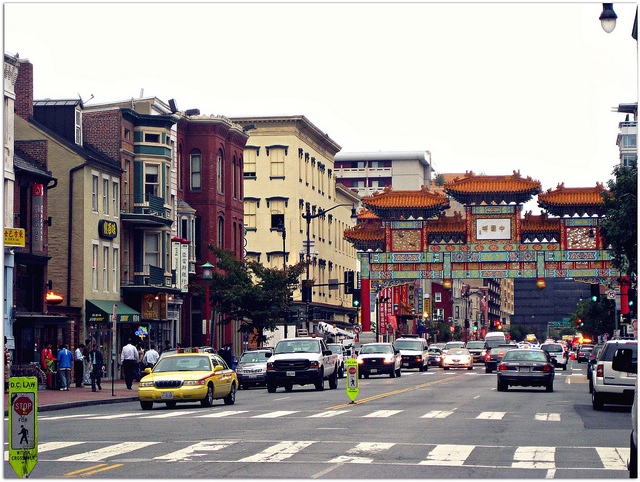
At their previous residence near Chinatown, the couple benefited from an upsurge of food delivery companies bearing dishes from restaurants, among other meal options.
But that’s no longer the case. George has experienced several meal delivery companies bypass communities like hers, even though they’re the ones who need them most. “This affects my quality of life,” she said. “It’s a fast paced world, and if we don’t want to cook, we have to figure out how we’re going to get food. That’s time we can spend doing something else.”
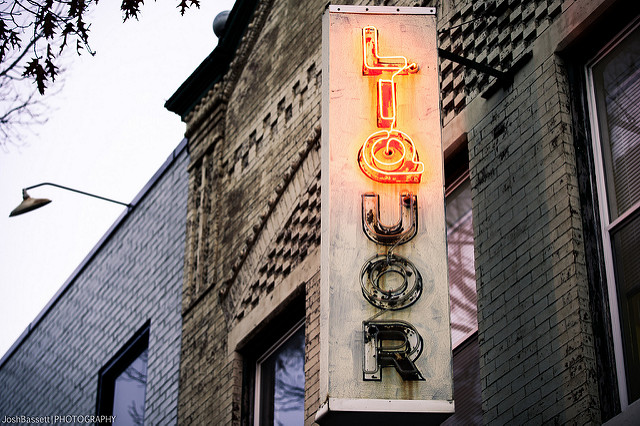 Photo by Josh Bassett
The food landscape of George’s neighborhood when she lived west of the Anacostia River “is not even comparable” to where she lives today, she said. On that side of town, her apartment was within a 5 mile radius of nearly 300 restaurants, according to Google maps. “It was not a question that when people came over we could walk to a restaurant,” she said.
George now lives in what’s considered a food desert.
To date, the entirety of Ward 7 has three sit-down restaurants, and neighboring Ward 8 has about half a dozen. A Chinese take-out joint, fast food spot, or liquor store appears at nearly every traffic light—grocery stores and farmer’s markets are few and far between.
While most residents who live in these communities—east of the Anacostia River—can’t walk to quality food establishments, many of them aren’t all that far from corridors that are saturated with bars and restaurants. George, for instance, lives just a ten-minute streetcar ride to H Street NE. Similarly, many Ward 8 residents can hop on a Circulator bus, bikeshare, or the Metro and—in about fifteen minutes or less—reach the slew of restaurants in Eastern Market, Capitol Hill, and Navy Yard.
Food delivery companies can make those same trips—and some do. Others acknowledge their geographic deficiencies and have strategies to serve a broader customer base. Other companies are content with their reach, or lack thereof.
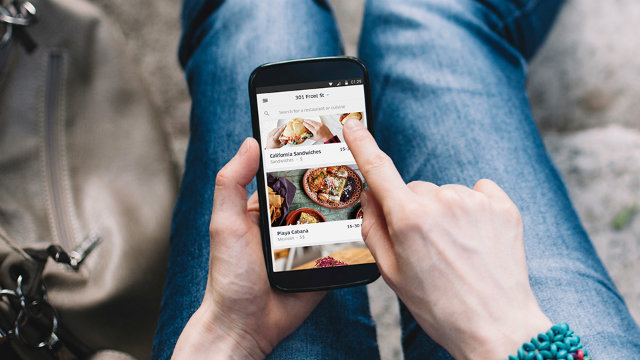 Photo courtesy of Uber
Like many startup founders, Tony Chen bases his services on research.
The brains behind Fetch Coffee told DCist that he began delivering Starbucks brew in Georgetown because the neighborhood’s residents range from college students and families to elderly residents and retirees. In addition, he said, Georgetown has an adequate mix of single-family homes and apartment buildings.
“We wanted to learn how Fetch Coffee would be used by each demographic, and this made Northwest D.C. a great place to start our delivery service.” Months after its launch, Fetch now also delivers lattes to people in Bethesda and Dupont Circle.
Uber has used a research-based approach in expanding its offerings, as well.
When the car sharing service started delivering food last year, drivers expedited lunch to customers in Georgetown, Capitol Hill, Adams Morgan, and Columbia Heights. “This region of the city has a lot of restaurant options with many people who already frequently eat lunch out, so [it] was a natural place to begin service,” spokesperson Taylor Bennett told DCist a month after the service’s launch in August.
He added that starting with a smaller area of the city would ensure that the company “could provide the best possible service and get a sense of user demand, how the operation works, and identify ways to improve before opening up to a broader segment.”
The company has since beefed up its meal plan—to a rocky start. When UberEATS became a standalone app with 100 restaurants in March, the company promoted the service to the entire city. But when an employee of a Ward 8 business tested the app, she got no results for places to eat. In the same manner, a Ward 7 resident was only provided one restaurant option.
Uber spokesperson Kaitlin Durkosh told DCist, “We’re working hard to partner with additional restaurants so that there is a variety of options no matter where you request in the city.” Uber told The Washington City Paper that demand was “off the charts,” at the time.
About an hour after the issue was brought to the company’s attention, a half dozen food options generated for those east-of-the-river users. At our Shaw office, there are more than 50 choices.
 Meal from Scratch DC via Facebook
Some companies’ method of growth relies more on customer input. Galley Foods, which sends drivers out with chef-prepared meals, tells folks to enter their zip codes on its website. If prospective customers’ areas aren’t covered now, they said they’ll expand if the company receives enough pings from one region.
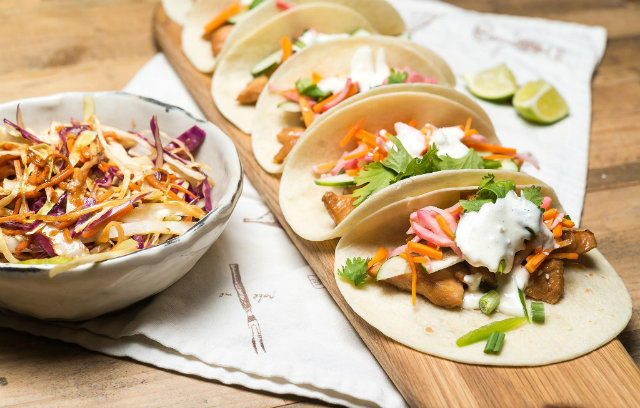
Scratch DC, which packages and delivers locally sourced ingredients for people to make meals themselves, has worked similarly, according to founder Ryan Hansan. Because of a high demand, he said, the company expanded its services throughout the city, and into suburbs such as Alexandria, Arlington, Bethesda, Chevy Chase, Silver Spring, and Takoma Park. “If someone reaches out requesting delivery to a certain zip, we do everything we can to get there,” Hansan said, adding that moving the company’s production facility to Langdon Park in Northeast also helped to distribute to more places.
Yelp’s Eat 24/7 and Foodler, two more companies that deliver meals from restaurants, service people both east and west of the Anacostia as well. Grocery delivery companies like Instacart, Peapod, and Relay Foods; chef-prepared meal delivery services Power Supply and Plated; and ingredient supplier Blue Apron do, too.
Still, some companies do not serve the entire city, and they’re just fine with that.
“While we have no immediate plans to expand our delivery coverage, we’re thrilled to continue to bring more customers across the city their favorite foods from the local restaurants they love with our service,” Catherine Ferdon of Caviar told DCist. The company delivers to “busy professionals” in pretty much all of D.C. except Wards 7 and 8.
Door Dash and Postmates also do not service these areas.
 Park 7 Apartments via Facebook
While George acknowledges that companies play a role in whom they serve, she also said that city officials can step up.
In response to the lack of delivery services to her constituents, Ward 7 Councilmember Yvette Alexander told DCist last year that her focus is on bringing in new restaurants. This included the opening of Sala Thai at the Park 7 development on Minnesota Avenue NE last October. She also promised that developments in Skyland and Capital Gateway would bring eateries to the ward. However, she more recently said that those options will take much longer due to Walmart’s decision to pull out of those developments.
Alexander also refuted the notion that poverty prevents her constituents from having access to quality food options, stating that her ward is home to many government employees and professionals. “We’re a very diverse ward with a mix of young people, families, seniors and singles, so we have a lot of mixed income communities,” she said.
One such resident is Courtney Snowden, the District’s deputy mayor for greater economic opportunity. “As a consumer, the inequity in delivery services is disappointing,” Snowden, a Deanwood resident, told DCist. “But more importantly, it is a lost opportunity for business owners who are missing out on a sizable customer base.”
Meanwhile, George said she’ll continue to watch improvements happen at a snail’s pace. “I can only assume that in five years—that’s a long time but—I think things will be different.”