Rachel Kurzius
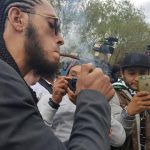
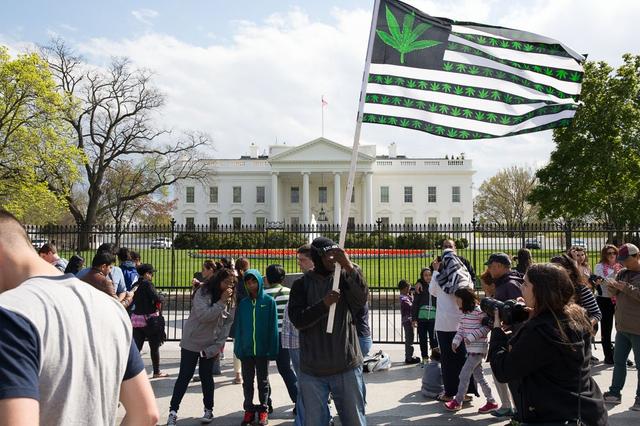 Reschedule 4/20 protesters this Saturday at the White House. (Photo by Benjamin Strahs)
The D.C. Council passed a ban on private pot clubs on first reading this afternoon by a vote of 7-6, bringing it one step closer to law.
The measure, introduced by Ward 5 Councilmember Kenyan McDuffie, prohibits smoking pot in any place where the public is invited, like bars or restaurants.
In early February, McDuffie moved the permanent ban from consideration after the council reached a compromise—unanimously voting to establish a task force that will come back in 120 days with recommendations regarding the feasibility of pot clubs in the District.
That task force is still underway, and Ward 1 Councilmember Brianne Nadeau proposed to postpone considering the ban until September 20—at which point the task force will have completed its work. That motion failed 6-7, with members Jack Evans, David Grosso, Vincent Orange, Elissa Silverman, and Charles Allen joining Nadeau. Those same six members voted against the permanent ban.
At-large Councilmember Orange said that the ban would undercut the task force. “We are getting ahead of ourselves and injecting our will instead of following what has been voted upon,” he said.
At-large Councilmember Grosso said that there have been no problems with pot clubs so far, and expressed concern that the current Congressional budget rider could make this legislation irreversible.
Mayor Muriel Bowser, who has come out against pot clubs, was watching the vote from the press room. “The Mayor supports the legislation and just informally stopped by the press room since she was around,” says spokesperson Michael Czin.
.@MayorBowser watches from press room as @councilofdc votes on marijuana clubs pic.twitter.com/7VaPw6Cbvs
— Mark Segraves (@SegravesNBC4) April 5, 2016
Today’s bill mirrors emergency legislation passed immediately after legalization to ban social use of marijuana. While the council overturned the ban on private cannabis clubs early this January for a few minutes, lobbying from the mayor and police chief led to a second vote that kept the emergency legislation in place.
“What bad news,” says Adam Eidinger of DCMJ, who has been fighting against the ban. “We were pretty confident we had the votes. Now we’ve got two weeks or so to change some votes. We just need to turn one vote—I think we can do that.”
Eidinger says that those who voted for the ban will pay at the ballot box, especially Chair Phil Mendelson. “I’m going to make sure he doesn’t win another election,” he says. “All Mendelson and McDuffy did was give Congress more authority to regulate D.C.”
The Drug Policy Alliance didn’t have kind words for Mendelson, either. “By pushing forward with a blanket ban the Chairman is aligning himself with prohibitionists, at the expense of local autonomy and contrary to the wishes of a majority of District residents,” said Kaitlyn Boecker, policy coordinator at the Drug Policy Alliance’s Office of National Affairs in a statement. “A blanket ban on marijuana consumption in all venues except a private residence will perpetuate the disproportionate effects of drug war policies on low-income residents and communities of color.”
Data released by the Drug Policy Alliance found that, despite the decrease in marijuana-related arrests thanks to decriminalization and legalization, racial disparities continue. Of the 259 public consumption arrests from July 17, 2014 (when public consumption became a criminal offense) to the end of 2015, 81.9 percent of them were of black people.
A January Washington City Paper poll found that 61 percent of District residents support “regulated places where adults can legally consume marijuana.”