 Rachel Sadon
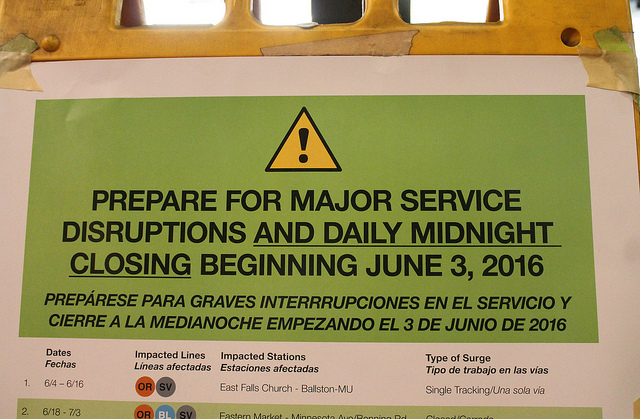 Photo by Elvert Barnes
On the first weekday of SafeTrack, Metro was “pretty much at the maximum of what we could move” in the affected area, General Manager Paul Wiedefeld said a news conference this afternoon.
In addition to closing the system at midnight every day of the week, WMATA has planned 15 “surges” of extended maintenance work over the course of the next year.
With continuous single tracking and headways of 18 minutes between Ballston and East Falls Church scheduled from June 4-15, WMATA urged riders to find alternatives to their usual commute. With 26 percent fewer people boarding west of Ballston, many heeded that advice (overall, the system was only down 1 percent, Wiedefeld said).
“Whatever you did today, do tomorrow, do Wednesday, do the rest of the surge. It worked okay today. But if everybody surges back to the subway system tomorrow, we’re going to have a problem,” Metro Board Chair Jack Evans said this afternoon.
He likened the preparations to a snowstorm, when people heed initial warnings and then want to return to normal. “If that does happen tomorrow, we could have serious overcrowding,” Evans said, adding that Mondays typically see the lowest weekday ridership.
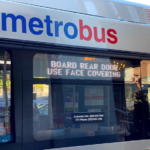
Saying that things “worked fairly well,” Wiedefeld noted that it seemed like many people started their commute earlier, so the peak period spread out, and that bus ridership was also higher (the Post also reported that maps appeared to indicate slightly more congestion than normal). He also thanked local jurisdictions for efforts to mitigate the impact of the work, including adding extra buses.
In addition to two train malfunctions, the other major hiccup was confusion at the Ballston station. After the rush hour passed, riders said there wasn’t enough (or conflicting) information about which side of the platform they should be on. Wiedefeld said that they would have more employees at the station tomorrow to give guidance.