
 Rachel Sadon
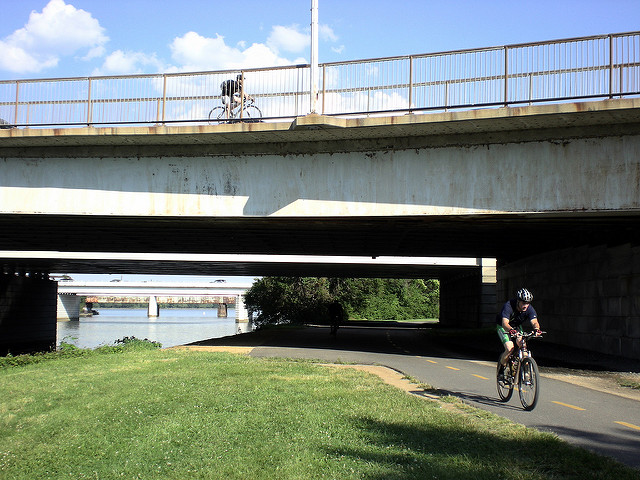 Photo by Kevin Harber
With SafeTrack snarling the roads and turning Metro cars into sardine cans, hundreds of affected commuters have opted to dust off their bicycles and take them for a spin instead. Bike counters in Arlington show increases of between 40 and 90 percent from a typical June day in 2015, according to BikeArlington.
“We want to get messaging out to everyone, including the experienced cyclists that we are seeing increased volumes, particularly on the Mount Vernon and Custis trails,” says BikeArlington director Henry Dunbar. “They are getting very crowded, so we need to remind everyone of trail etiquette like calling out and making safe passes, particularly with slower and inexperienced riders out there.”
The Rosslyn Bikeometer recorded 2,325 trips on Monday—nearly 1,000 more than the average for weekdays last June, which was 1,336. On Tuesday, the counter was offline for a few hours, but BikeArlington estimates that cyclists whizzed by 2,232 times (“Throughout the morning, they were tracking almost exactly the same as on Monday and all our other counters in the area were similar,” Dunbar says, so they made a “conservative estimate” for what they missed).
Those figures are higher than any other day in 2016 with the exception of Bike to Work Day on May 20, when the Bikeometer recorded 2,600 trips.
While cycling has clearly been popular, BikeArlington’s “bike trains” have been less so. In fact, no one has showed up for them thus far.
The idea was that experienced cyclists would lead group rides between East Falls Church and Rosslyn (three in the morning and one in the afternoon) to to ease newbie bike commuters onto the trail.
“Our theory on the bike trains is that it adds more time [to stop five times along the way] and people get on bikes because time is very important to them,” Dunbar speculates. They’ll continue running them this week in case anyone belatedly decides to join in.
#Safetrack + @BikeArlington pic.twitter.com/cmMT2h6V1P
— BeyondDC (@beyonddc) June 7, 2016
But they also added signage at each of Arlington’s affected stations meant to direct riders along the route, which many have said they found helpful.
“In figuring we were going to have a lot of inexperienced commuters, we wanted a little more visible than the regular wayfinding that Arlington already has in place,” Dunbar says. They are in talks with the National Park Service about putting them in place on the Mount Vernon Trail, too.