Rachel Kurzius
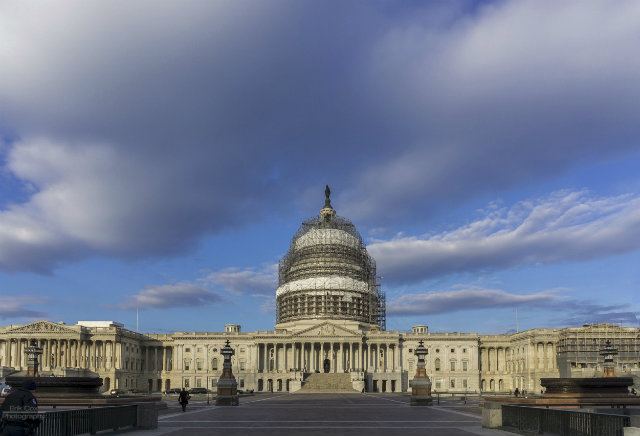 Photo by Eric Cox Photography.
All but two of the D.C.-related amendments to the House budget bill were ruled out of order, and will not be discussed or voted on this week.
Some of the amendments, like ones designed to roll back gun control laws in D.C., raised the ire of local politicians, who vowed to fight the measures on the House floor. But others, like the Norton-Rohrabacher amendment and the Norton-Quigley-Lee amendment, wanted to make local funds available for marijuana legalization and abortion.
Of the two that will be discussed, one of them would give D.C. permanent budget autonomy. The bill in its current form repeals the District’s ability to control its locally raised funds, adopting language from a different bill, the Local Budget Autonomy Amendment Act, which has already passed the House, though President Barack Obama has issued a veto threat.
D.C. Congresswoman Eleanor Holmes Norton introduced the pro-budget autonomy amendment, which has the support of President Obama. In a statement of policy, the administration “urges the Congress to adopt provisions included in the FY 2017 Budget request that would permanently allow the District to use local funds without congressional action.”
The Right to Life Committee has told members of Congress to vote against Norton amendment. “If Congress fails to assert its constitutional responsibility over the seat of government, we can expect more assaults by District authorities against pro-life and other conservative groups that are based in the District,” writes Douglas Johnson, legislative director of the Right to Life Committee. The Concerned Women for America, another conservative group, has also come out against Norton’s amendment.
Those two conservative groups are telling members to vote for the other District-oriented amendment though—Congressman Gary Palmer’s (R-AL) provision to block funding for the Reproductive Health Non-Discrimination Act, which prevents employers from discriminating based on reproductive health decisions.
This same House already voted to overturn RHNDA in 2015, though the bill still became law in D.C. when the Senate never took up a vote.
Right to Life’s Johnson writes that “this law places groups such as National Right to Life in legal jeopardy simply for making hiring or firing decisions based on adherence to core pro-life principles.”
Local cannabis and drug advocacy groups are disappointed that the House won’t vote on the Norton-Rohrabacher amendment, after expecting a close contest. The measure would have allowed D.C. to use local funds to establish a regulatory system for the now-legal drug. “It went from being a really busy week for us to being an uneventful one,” says Kaitlyn Boecker, policy coordinator for the Drug Policy Alliance. “It’s a huge disappointment, because it’s so hard to get a vote these days.”
Indeed, House Democrats are currently staging a sit-in to get a vote on gun control measures.
Updated to reflect that Norton introduced the Norton-Quigley-Lee amendment.