Rachel Kurzius
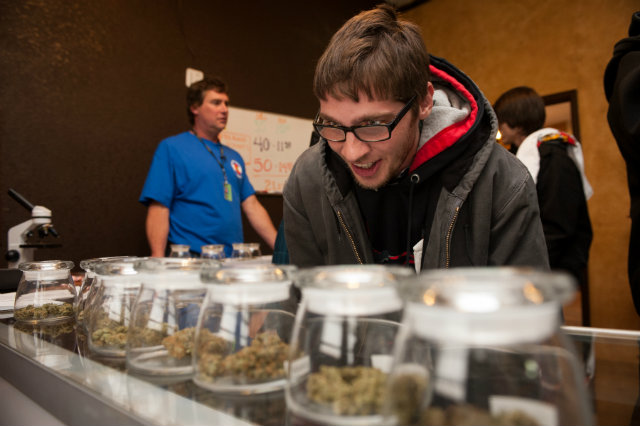 A customer examines marijuana strains to purchase at the 3-D Denver Discrete Dispensary. (Photo by Theo Stroomer/Getty Images)
As the District’s odd legal limbo over cannabis continues, the D.C. Department of Health is now recommending taxing and regulating marijuana sales in a new report.
Under the legalization law implemented in February 2015, you can possess, purchase, and grow marijuana for recreational use, but you can’t sell it.
Right now, D.C. is blocked from fully implementing legalization because of a budget rider passed in 2014. An opportunity to rid the current appropriations bill of this rider failed last week, when the Rules Committee did not rule the Norton-Rohrabacher amendment in order. The measure would have allowed D.C. to use local funds to establish a regulatory system for the now-legal drug.
For a decade, Congress blocked D.C.’s medical marijuana program using the same tactic.
According to one projection, if D.C. could allow the legal sale of marijuana by 2018, the recreational sales would reach $93.6 million in 2020. D.C.’s chief financial officer put the number even higher—at $130 million. Washington and Colorado both have such systems, and Colorado reached nearly $1 billion in marijuana sales last year, raising about $135 million in cannabis taxes and licensing fees alone in 2015.
Despite making a pot club ban permanent earlier this year, several D.C. councilmembers are looking to implement a tax and regulate scheme. “We’re going to keep moving forward to tax and regulate in the District,” At-large Councilmember David Grosso told DCist at the National Cannabis Festival this spring.
DCDOH calls for the District to impose “state taxes on production, distribution, and sales along with a licensed market participation, age restriction, and prohibitions on advertising and marketing to minors,” using the regulatory models employed for tobacco and alcohol, along with strengthening treatment and education programs about the drug’s health consequences.
The Drug Policy Alliance is heralding the report. “As DOH’s recommendation recognizes, a regulatory system will increase public health and safety, allow our policy makers to address much needed reforms, and generate tax revenue to fund treatment and education,” said DPA policy analyst Kaitlyn Boecker in a statement. “District lawmakers should heed the Department of Health’s recommendation and move forward with establishing a regulatory system for marijuana immediately.”
According to a Washington City Paper poll released this January, 66 percent of D.C. residents were in favor of taxing and regulating marijuana like alcohol if a legal method were available to do so.
The DCDOH report examines cannabis use in D.C. more broadly, examining the drug’s public health risks. WAMU was the first to write about the report, which was released late last week.
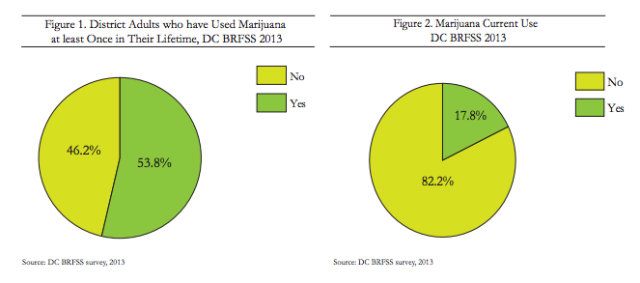 Image courtesy of DCDOH.
One such risk? Driving under the influence. Marijuana is the second most commonly detected drug in traffic fatalities, after alcohol. However, the report notes that because cannabis stays in the system for days and sometimes weeks, the driver may not have been high during the accident.