
 Rachel Sadon
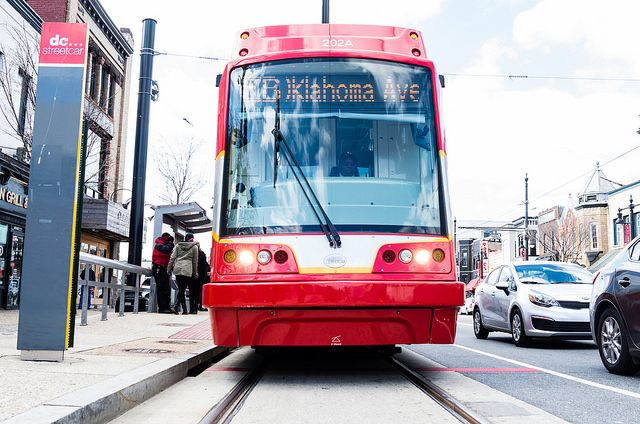 (Photo by washingtonydc)
Overall ridership on the streetcar dropped by more than 5,000 riders between April and May, according to figures from the District Department of Transportation, perhaps impacted by special events in the former and record-breakingly bad weather in the latter. The streetcar saw 68,420 trips in April, in comparison to 63,372 in May.
It is still too early to detect long-term trends, DDOT says, but the first three months of streetcar ridership data does give some indication of how users are utilizing the new system. Fridays, for example, see the highest numbers of weekday riders.
And riders take more trips on Saturdays than on weekdays, which saw consistent average daily ridership numbers around 2,400 during each of the first three months. The Saturday averages, meanwhile, have been higher but less stable—starting at 3,053 in March, rising to 3,399 in April, and falling to 2,581 in May.
“When comparing May ridership numbers to April in particular, weather and special events were contributing factors,” says DDOT spokesman Terry Owns. “During April, the streetcar recorded its second highest Saturday ridership number on the 30th. Nearly 5,000 people rode the system to the Bluegrass Festival. On the other hand, May saw roughly a 10 day period of record rainfall. We can’t make definitive statements about the impact of those factors, but they are elements to consider when looking at a swing in ridership numbers.”
He adds that the March ridership numbers might have been inflated by initial interest in the system’s opening. Indeed, in the streetcar’s first 10 days, people took nearly 30,000 trips; more than 8,000 of those occurred on opening day, when folks swarmed H Street in disbelief/celebration.
Owens says the agency is keeping an eye on trends, but three to four months of data isn’t statistically significant. DDOT officials are pleased, though, to see that daily ridership has been consistently ahead of the 1,500-2,000 they expected. Fares have been free during an introductory period of an unspecified length.
When looking at figures from last month and comparing them to other systems, Greater, Greater Washington found that the D.C. system is in the middle of the light rail pack nationally in terms of ridership.


