Rachel Kurzius
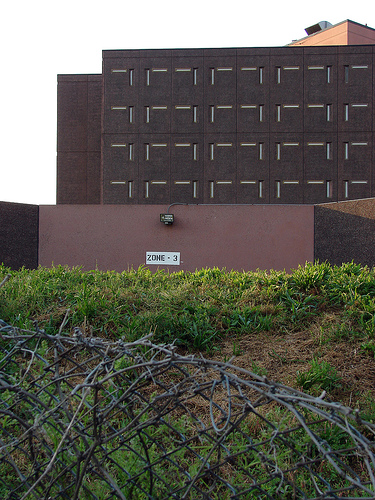 Photo by AlbinoFlea
One D.C. Jail inmate’s lawyer requested in court that her client be moved from D.C. Jail because the heat in the facility constitutes cruel and unusual punishment.
The lawyer for Kevin Chase, Katerina Semyonova, argued in court yesterday that the high temperatures in the correctional facility are a violation of the Constitution, according to an account from D.C. Witness. The Eighth Amendment protects citizens from cruel and unusual punishment.
Court records show Semyonova filed an emergency motion for relief from unconstitutional conditions at the D.C. Jail on July 20, after more than a week of complaints from prisoners, advocates, and guards about the temperature inside the jail.
Deborah Golden, the director of the DC Prisoners’ Project, says that her office has received many calls from inmates and their families about the heat, and the problem is worse than in years past.
The ventilation system at the 40-year-old facility has issues circulating cool air, said Deputy Mayor for Public Safety Kevin Donahue, but he added that the administration “deployed all the resources we have” after seeing temperature readings above 85 degrees from cell blocks. (This is one of many documented problems with the building, which also include vermin, leaking, and mold, according to a Washington Lawyers Committee report from last year.)
DOC said last week that it’s “working closely with the Department of General Services on system improvements to address temperatures in the DC Jail. An HVAC contractor has been on site and completing work to enhance the airflow and circulation systems.”
Semyonova contended in court that the individual jail cells are six to seven degrees hotter than the shared space where DOC is taking the temperature, and DOC was not taking heat readings from the cells or allowing others access to do so.
“You really can’t tell what the situation is without temperature readings in the cells, because that’s where people are up to 24 hours in the day,” Golden says. She also notes that the temperature readings available are averages. “We can see from the averages that the temperature has been going down and the repairs, while not enough, are a temporary stop-gap measure. But it doesn’t tell you what the experience is.”
That’s not the only aspect missing from the temperature readings, says Golden. “The other thing that one needs to know is the humidity so you can tell the heat index, because that tells you what it really feels like and there can be a big difference between the air temperature and the heat index.”
DOC confirmed it received our requests for comment, and said it will respond. We will update this story when we hear back.
Judge Florence Pan denied Semyonova’s request for Chase’s relocation. Pan said, according to DC Witness, that a medical examination found that Chase’s health was not endangered by the heat wave, and moving him would prevent another inmate with more health risks from relocating. Chase, who stands accused of murdering 38-year-old Marcus Manor last October, was returned to his cell in D.C. Jail, according to court records. Semyonova has not responded to a request for comment.
DOC has already relocated nearly 200 inmates, with an emphasis on those who are older than 50 or have medical conditions, according to NBC 4.
Nearly two weeks ago, 70-year-old inmate Lester Irby died in the jail. DOC said in a statement that there is “no reason to believe that there is a correlation between elevated temperatures and this inmate’s death.” The results of an autopsy are pending.
In a letter to Mayor Muriel Bowser and public safety officials, the Washington Lawyers Committee (where Golden works) asked that the administration consider other options for inmates who pose no risk to public safety: “Men can be released to a halfway house, put on GPS monitoring, sent to the Correctional Treatment Facility, or released to the community.”
According to DOC figures released this June, 17 percent of inmates at D.C. Jail are there because of technical parole violations, which “is a long way of saying somebody violated a condition of their parole but didn’t commit a new crime,” says Golden. Moving those inmates out, she contends, could open up space in the facility, even though that action requires federal intervention.
But even that would just be a band-aid fix, Golden says. She argues that the real solution is a new jail, and officials including the mayor, D.C. councilmembers, and the prison guard’s union all agree—though questions about funding and location remain.
“It’s like trying to keep an old Pinto on the road,” says Golden. “You could probably do it and every year get a bunch of repairs that will help you pass inspection for that day. But it’s still a dangerous piece of equipment that’s going to break down and hurt people.”