 Photo by Matt Cohen.
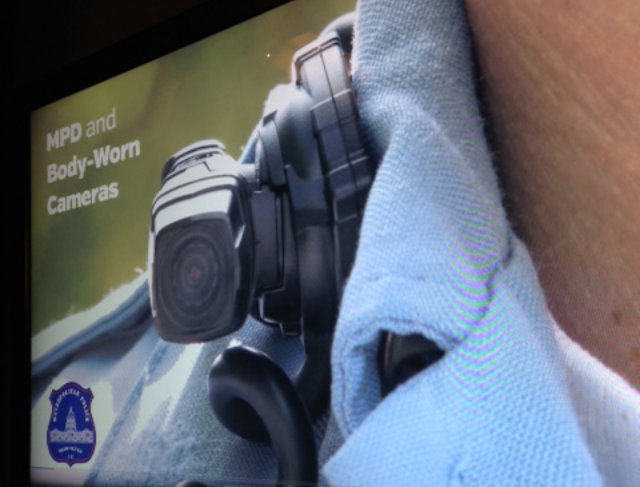
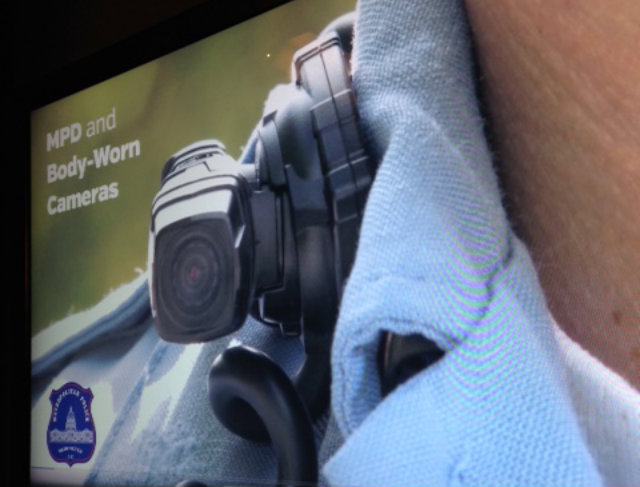
A D.C. Police officer fatally shot a man over the weekend, but the officer’s body-worn camera was not recording the incident. Now, Mayor Muriel Bowser announced today that dispatchers will be required to remind officers to activate their body worn cameras, according to a tweet from Kevin Donahue, deputy mayor for public safety and justice.
In return, officers will have to confirm to dispatchers that they’ve activated their cameras whenever they respond to a call or interact with members of the public, The Washington Post reports.
Interim Police Chief Peter Newsham made the policy change, according to The Post. This comes after an unnamed officer shot 31-year-old Terrence Sterling near Mount Vernon Square on Sunday.
According to a Metropolitan Police Department report, an officer saw Sterling driving a motorcycle recklessly near the 1700 block of U Street NW around 4:30 a.m. A few moments later, another officer spotted him at 3rd and M Streets NW. police say that when the officer was exiting the passenger side of his cruiser “to stop the driver,” Sterling “intentionally drove into the passenger door.” As a result, the officer shot Sterling, who was taken to a hospital where he was pronounced dead.
However, a witness told Fox 5 News a different account of what happened next. “The motorcycle was trying to speed off and drive away, but he couldn’t because he was kind of caught in between the sidewalk at the curb and the police car,” Kandace Simms said. “So the police were trying to open the passenger side door and he couldn’t because the motorcycle was right there, and I guess when he couldn’t open the door, he rolled down his window and shot twice.”
D.C’s expansive police body-worn camera program is intended to clear up what occurred in instances like this one, but a day later, Bowser told reporters that the officer’s camera footage only showed what happened after he shot Sterling.
The D.C. Chapter of the ACLU released a statement saying that the shooting is “a tragedy that, by all accounts, may have been avoided.” It also addresses the two conflicting accounts of the incident from the police officer and the witness.
While one of the goals of the body-worn camera program is to promote accountability and transparency, this case does neither, according to the ACLU. “This lack of accountability worsens the schism between communities of color and the officers sworn to serve them, and ultimately puts all our lives and livelihoods in danger.”
Sterling’s death has received national attention—he’s become a hashtag onsocial media and outcry from people like San Francisco 49ers’ Colin Kaepernick.
The new mandates will be implemented by the end of this week, according to The Post. Over the past 30 days, police captured 55,577 videos using body-worn cameras, Newsham told reporters on Monday, according to WTOP. In about 10 instances, officers forgot to activate the “new technology,” and officials are “actively going out there and trying to remind our officers to put the body cameras ‘on’ when they’re supposed to,” he said.