After weeks of tension, protests, and conflicting accounts, the District released today the name of the officer who fatally shot a motorcyclist in Mount Vernon Square two weeks ago. Officials also released footage from a body-worn camera, which the officer turned on after the shooting.
Police say 27-year-old Brian Trainer is the officer who killed Terrence Sterling in the early morning hours of September 11. He is a four-year veteran of MPD.
Mayor Muriel Bowser released the footage because she deemed it to “be in the public interest and consistent with the goals” of D.C.’s body-worn camera program “to create broader accountability between law enforcement and communities, and to maintain open and transparent government,” according to a release.
The graphic video shows a bloody scene where 31-year-old Sterling lays on the ground, fighting for his life. While one officer gives him CPR, another officer screams to Sterling, “Keep breathing, look at me!”
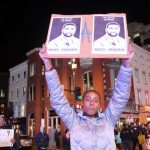
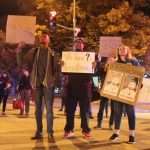
The release of the officer’s name and video footage comes a day after protesters blocked streets in Northwest where the incident took place, calling for transparency in the case. More than a week ago, activist group BYP 100 called for the release of the footage and the officer’s name, as did Ward 3 Councilmember Mary Cheh.
A witness has also given a contradicting report from the official police account of what happened leading up to the shooting, and officials announced that Trainer’s body-worn camera was turned off during the shooting.
According to the MPD report, an officer saw Sterling driving a motorcycle recklessly near the 1700 block of U Street NW around 4:30 a.m. A few moments later, another officer spotted him at 3rd and M Streets NW. Police say that when Trainer was exiting the passenger side of his cruiser “to stop the driver,” Sterling “intentionally drove into the passenger door.” As a result, Trainer shot Sterling, who was taken to a hospital where he was pronounced dead.
However, Kandace Simms told Fox 5 News that “the motorcycle was trying to speed off and drive away, but he couldn’t because he was kind of caught in between the sidewalk at the curb and the police car. So the police were trying to open the passenger side door and he couldn’t because the motorcycle was right there, and I guess when he couldn’t open the door, he rolled down his window and shot twice.”
Police say that other witnesses have come forward and given their accounts of what happened that morning as well, according to Fox 5.
Following the incident on September 11, D.C. Police released a statement saying that Trainer was put on administrative leave. A day later, Mayor Muriel Bowser told FOX 5 that a second officer, who was driving the cruiser, was placed on leave because he allegedly broke police protocol by using the vehicle as a barricade.
Four days after the shooting, Mayor Bowser announced policy changes for police body-worn cameras to require dispatchers to remind officers to turn their cameras on before encountering a member of the public. In return, officers must confirm that they have done so. During an earlier police-involved shooting, on September 7, the officer also neglected to turn on his body camera.
Matthew Mahl, chairman of the D,C, Police Union, told NBC 4 today that he believes officers don’t intentionally keep the cameras off. “We have to build that muscle memory, the officers need to be trained to [turn] that body camera on as soon as they’re interacting with the public,” he said, noting that some situations are “fluid.”
Earlier this month, Interim Police Chief Peter Newsham said that there are 10 cases under investigation in which officers were not recording incidents as required under the policy.
For months, the family of Alonzo Smith has also been trying to get the city to release the names of the special police officers involved in his death. In November, the 27-year-old teacher was found unconscious and handcuffed inside an apartment building in Anacostia. The medical examiner’s office has ruled the case a homicide, but no charges have been filed. Special police officers are currently afforded limited arrest powers after 40 hours of training, though officials have proposed increasing and enhancing the requirements. They aren’t required to wear body cameras.