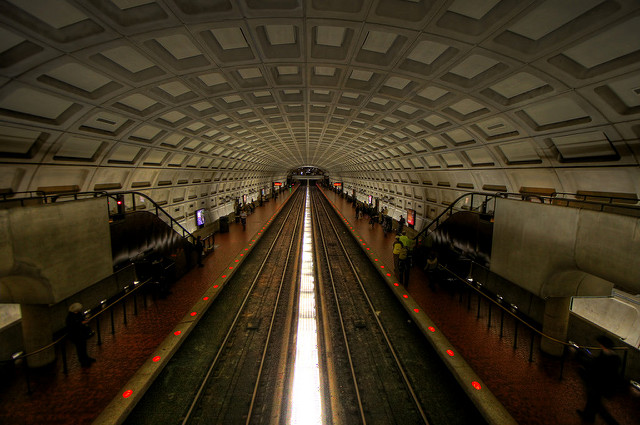
 Photo by evtwal
Metro’s general manager has given his budget plan for 2018 a name: “Reality Check.”
Facing declining ridership and a yawning budget gap, Metro General Manager Paul Wiedefeld is proposing fare increases for both Metrobus and rail, longer wait times on Metro, and eliminating some bus routes. It also calls for cuts to employee healthcare expenses and firing about 1,000 people, which Metro acknowledges is “unprecedented,” and higher subsidies from D.C., Maryland, and Virginia.
Officials will present the $1.8 billion operating budget proposal to the Metro board’s finance committee on Thursday.
“Metro has to face reality when it comes to what the region says it can afford and direct those resources to best serve the riders we have today,” Wiedefeld said in a release.
The plan calls for cuts to 14 bus routes, including Metrobus’ only service to Baltimore Washington International Airport, according to The Washington Post. Five of the proposed lines are in Maryland, eight are in Virginia, and one is in D.C.
It also proposes the following rail adjustments:
- During peak periods, trains would operate every 2-4 minutes at stations served by multiple lines in the system’s core.
- Trains would run every 8 minutes in peak periods instead of every 6 minutes today.
- Service would become more frequent for Blue Line riders, where trains are now scheduled every 12 minutes.
- Rush+ trains would be eliminated.
- During most off-peak periods (e.g. midday, early evening, and weekends) trains would run every 15 minutes on each line.
Transportation advocates called the proposal totally unacceptable. “This budget will cripple Metro. It is fiscally, socially, and economically irresponsible,” said Action Committee for Transit President Ronit Aviva Dancis. “Under this budget, overcrowded trains will leave passengers standing on the platform. Trains that run 8 minutes apart in rush hour and 15 minutes apart the rest of the day are unworthy of a world capital.”
Meanwhile, riders would pay more money to commute. During peak hours, the cost to board Metrorail would increase by a dime to $2.25, and the new maximum for distance-based fares would be $6. The flat rate for bus riders will jump from $1.75 to $2. Additionally, daily parking fees will increase by 10 cents.
While fare increases would generate about $21 million from riders, not everyone is on board. Metro Board Chairman Jack Evans has said that D.C. plans to block any proposed fare increases, according to WTOP. And Mayor Muriel Bowser is concerned that bus fares are raising by a higher percentage than train fares.
And while cuts to jobs and benefits would save the system about $50 million, according to Wiedefeld, labor groups are fiercely opposed. ATU Local 689 said in a release that the budget “will send Metro into a death spiral for riders, workers and the economy.” They plan to protest at the Southern Avenue Metro station and various bus stops today at 1 p.m.
Metro officials will request in December that the board approve a public hearing and other community-based outreach in considering the budget. Community members will have a chance to weigh in beginning in late January.
And the board has until March to approve the final budget in order for it to take effect July 1, 2017.
This post has been updated with more detail about Metrobus eliminations.