 Rachel Sadon
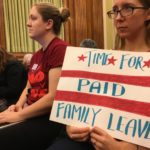
 (Photo by javajanie)
The D.C. Council voted 11-2 on first reading today in favor of a highly anticipated and hotly contested paid family leave law.
Under the bill as passed, nearly all D.C. workers would be entitled to eight weeks of parental leave, six weeks to care for an ailing family member, and two weeks in the event of a personal illness.
“I think it speaks to our values, where we are in the District of Columbia and our priorities,” said Ward 5’s Kenyan McDuffie.
Amid a yearlong consideration of the Universal Paid Leave Amendment Act of 2016 and major lobbying efforts from both sides, the legislation’s parameters shifted dramatically. It was first proposed last October as 16 weeks of paid sick and family leave, and the most recent version offered 11 weeks of paid leave in the event of a birth or adoption and eight weeks to care for an ailing family member. But the Council unanimously voted in a committee meeting earlier in the day on an amendment that lowered those totals in order to also include personal medical care.
But as has always been the case, the wage repayment will be administered through an insurance-like, government administered program.
The system will be funded by a 0.62 percent payroll tax to the tune of $246 million a year. The city’s chief financial officer estimates that it would also cost somewhere between $40 million and $80 million to set up.
An analysis by the D.C. Council found that the effect on the economy would be minimal—with employment levels expected to remain between 99.79 percent and 99.99 percent of what would otherwise be expected in 2027.
Federal employees wouldn’t be covered and self-employed workers could choose to opt in. Residents of Virginia and Maryland who work in D.C. would be covered, which was a point that opponents of the measure seized upon.
“I cannot justify paying $166 million to people who live in Maryland and Virginia so we can pay $80 million to our own residents,” said Ward 2’s Jack Evans, who has emerged as the most vocal opponent of the bill.
His concerns were echoed by outgoing Ward 7 Councilmember Yvette Alexander, who cast the other dissenting vote. “I do take an issue with us passing the bill with the majority of residents living out of the District of Columbia,” she said this morning. “It’s not to be taken lightly.”
Alexander and Evans were also joined by Ward 4’s Brandon Todd, Ward 8’s LaRuby May and At-large Councilmember Anita Bonds in raising issues and concerns.
But even those who expressed qualms with the legislation at a committee meeting earlier in the day have been careful to couch their opposition in terms of the specifics of the measure, rather than against paid leave more broadly.
“I am for supporting District families,” Ward 4’s Brandon Todd said before going on to ask if there were more “pressing problems” to use the $240 million raised by a payroll tax, “like a crumbling Metro and a backlog of school modernization projects,” and if paid leave could be enacted another way.
“I want to start with the premise that everyone one of us supports this. This isn’t an issue like a stadium, where I support it or I don’t support it. Everybody supports family paid leave,” Evans said at this morning’s committee meeting. “I have more kids than anybody on this Council. My wife died of breast cancer … Nobody understands [the need] better than I do. My only issue is the finances.”
But when it was clear that the bill had enough support to move forward, he decided against a motion to table it and withdrew an amendment that proposed an employer mandate instead.
Evans then introduced a slew of amendments to modify the bill as proposed but again withdrew them after Grosso agreed to consider several before the second reading. Those included measures that would require certification from a healthcare provider attesting to the necessity of leave and assert that anyone receiving paid leave couldn’t earn wages from other work.
Mayor Muriel Bowser hasn’t said very much publicly about the bill, but she has expressed deep skepticism, and two councilmembers charged that major changes that May planned to float originated with the mayor’s office.
Bowser “remains concerned that the Mendelson bill, which was only unveiled to the public last week, would raise taxes $246 million in the District but only provide a third of the benefits to D.C. families while the rest support Virginia and Maryland residents,” a mayoral spokesperson said in an emailed statement. Once the bill makes its way through the legislative process, she “will review and make a final decision on if this is something she can support.”
The D.C. Council will take a second reading on the bill on December 20 and is widely expected to pass it again. Should Bowser decide she couldn’t support the measure, it would take nine councilmembers to override a mayoral veto.
Proponents of the bill cheered today’s votes and expressed confidence that it will get to the finish line—putting D.C. in the company of California, New Jersey, Rhode Island, and New York (which will begin implementing its program in 2018).
“As a country, we lag behind the rest of the world,” Grosso said. “But as a city, we will be a leader of this movement.”
For more details, see our paid family leave explainer.