 Rachel Sadon
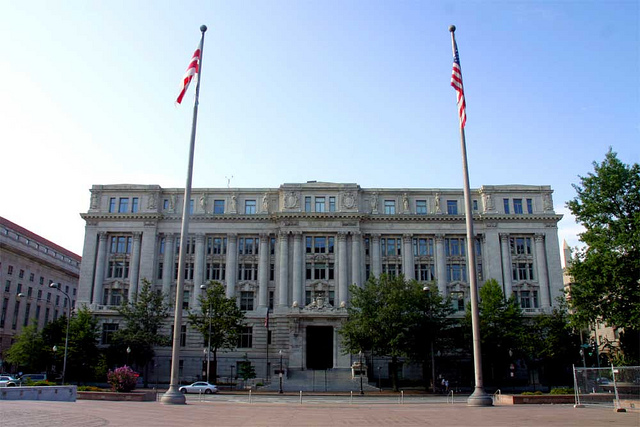 (Photo by David Gaines)
The D.C. Council is set to take a vote today on one of the most highly anticipated and hotly contested bills in recent memory: the “Universal Paid Leave Amendment Act of 2016.” While Council watchers have been paying close attention to the back and forth, here’s the gist of it for the rest of you.
What’s the backstory?
Last October, At-large Councilmembers David Grosso and Elissa Silverman co-introduced a bill that would have offered 16 weeks of paid medical and family leave. It quickly found support from most of their colleagues on the Council but several analysts and the mayor’s office expressed skepticism about the funding model. Mendelson took over the issue and his office has been studying costs and logistics. The D.C. Council held three hearings but broke for its summer recess without taking a vote.
What are the details of the plan?
Under the draft of the bill released by Mendelson, D.C. workers would be entitled to 11 weeks of paid leave in the event of a birth or adoption and eight weeks to care for an ailing family member Under an amendment unanimously agreed upon at a committee meeting, D.C. workers would be entitled to eight weeks of paid leave in the event of a birth or adoption, six weeks to care for an ailing family member, and two weeks for personal medical care, which would be funded by a .62 percent increase in payroll taxes. Federal employees wouldn’t be covered; residents of Virginia and Maryland who work in D.C. would be covered; and self-employed workers could choose to opt in. When employees take leave, their pay will come from a citywide pool. Workers will get 90 percent of their pay back, up to 1.5 times the minimum wage (in 2020, when it hits $15 an hour, that would be equivalent to $46,800). Any amount over that would be paid back at 50 percent, capped at $1,000 per week. It will cost the city $238 million a year, with an initial investment of as much as $80 million to set up an IT system. The CFO estimates that 540,000 people will be eligible, including self-employed workers who may choose to opt out.
What kind of precedent is there?
While the United States lags far behind much of the rest of the world in terms of paid parental leave, there is precedent. California, Rhode Island, and New Jersey all offer paid-leave programs, and New York is implementing one in 2018. They each vary in their terms. At the low end, Rhode Island offers four weeks for family care; at the high end, New York will offer 12 weeks when the law is fully implemented. All four also offer medical leave to care for one’s self or a family member, ranging from 26 weeks in New York and New Jersey to 52 weeks in California. D.C.’s law is among the most generous in terms of both time and the repayment schedule, but it doesn’t include workers’ own care in the event of illness. For a full breakdown of states that have already enacted paid leave, see this chart from the National Partnership on Women and Families.
Where does the mayor stand on this?
WAMU published a story back in January with the headline: “D.C. Paid Family Leave Proposal Faces Two Hurdles: Cost And Mayor Bowser.” Mendelson has largely worked figured out the finances (with the caveat that, though the taxes raised will be enough to cover the program and meet a reserve, the CFO cautions that funds have not yet been appropriated to implement the system and there are a number of other risk factors). But Bowser has been characteristically reticent on the issue. Just as she expressed general skepticism of a ballot initiative to raise the minimum wage to $15 (she came out in favor of it months later), the mayor has long been publicly equivocal about the paid leave proposal. Most recently, when the first details of the proposal were shared with two media outlets, Bowser’s spokesman issued a statement that “without the full details she remains concerned that the legislation does not go far enough in putting D.C. families first. This is about fairness, and if we are going to raise a quarter of a billion dollars in new taxes each year, then D.C. families should be the primary beneficiaries.” If the bill were to pass and the mayor then vetoed the measure, it would take two-thirds of the Council to overturn it.
How would this affect businesses?
Predictably, this very much depends on who you ask. Labor groups have rallied around the proposal, arguing it is a bulwark against the rising cost of living in D.C. and would mandate paid leave benefits in low-wage fields that rarely offer them. A number of small local businesses have also been vocal supporters, arguing that the insurance system is a significantly more sustainable way for them to offer the benefits. On the flip side, an editorial in The Washington Post argued the plan is half-baked. Other opponents have seized on the breakdown of workers, arguing that the bill benefits too many non-D.C. residents (the CFO estimates 36 percent of those covered live in D.C., 39 percent live in Maryland, and 25 percent live in Virginia). And a number of business groups have argued that the plan would hurt the economy, but a Council analysis found that employment levels in a decade would remain between 99.79 percent and 99.99 percent what would otherwise be expected.
So what’s happening now?
The Council is scheduled to take the first of two votes on the bill. Outgoing Councilmember LaRuby May announced that she would offer a series of dramatic changes to the bill, removing the insurance system and replacing it with an extension of the current sick leave system and adding tax credits for families. Both Grosso and Silverman immediately issued statements blasting the proposal, and tying it squarely to the mayor’s office. “It is legally insufficient, regressive, and harkens back to the inappropriate politics surrounding school funding that I have pushed to end in my time on the Council. Let’s be clear from whom this proposal is really coming: the Mayor,” Grosso said.
This story has been updated to reflect an amendment passed unanimously at a committee meeting today, changing the bill’s coverage.