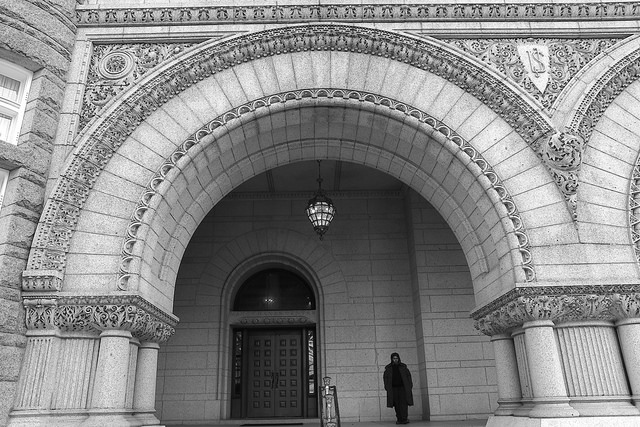
 Photo by Fritz Myer
Amid accusations that President Donald Trump is violating the Constitution’s Emoluments Clause, Politico reports the first publicly known payment on behalf of a foreign government to a Trump property since Inauguration Day.
According to Politico, a lobbying firm working for Saudi Arabia paid for a room at the Trump International Hotel at the Old Post Office for January 23 through 26.
This booking could support a government ethics watchdog lawsuit that claims Trump is personally making money off foreign governments through his businesses, a violating of the Emoluments Clause. But Trump’s attorneys have argued that the clause doesn’t apply to fair-market transactions.
The hotel stay was for a veteran who was part of a group that urged Congress to repeal a law allowing the families of 9/11 victims to sue Saudi Arabia, according to Politico. The group was organized by Qorvis MSLGroup, a communications firm that lobbies for the Saudis, along with NMLB Veterans Advocacy Group. The bill for the veteran’s stay was paid for by a subcontractor to Qorvis, representing Saudi Arabia.
Earlier this month, President Trump stepped down as head of the Trump Old Post Office LLC, the company that runs the D.C. hotel, and his eldest son is now at the helm. However, President Trump has not renounced his ownership stake and appears to continue to be enriched by the hotel even as Don Jr. manages it.
While an attorney said that the Trump Organization would donate profits from foreign government payments to Trump hotels to the U.S. Treasury, it’s unclear how it will identify foreign emoluments, determine profits, and make those donations.
The Emoluments Clause has never been tested in court, and the lawsuit against Trump is “an audacious gamble,” according to Slate. But Laurence Tribe, a constitutional law expert at Harvard who’s also part of the suit, told Politico that the case of the Saudi payment “is bound to be one of a vast stream of instances. It’ll feel like drinking out of a fire hydrant by the time the court takes up our complaint.”