Rachel Kurzius
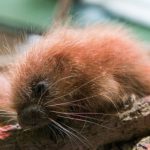
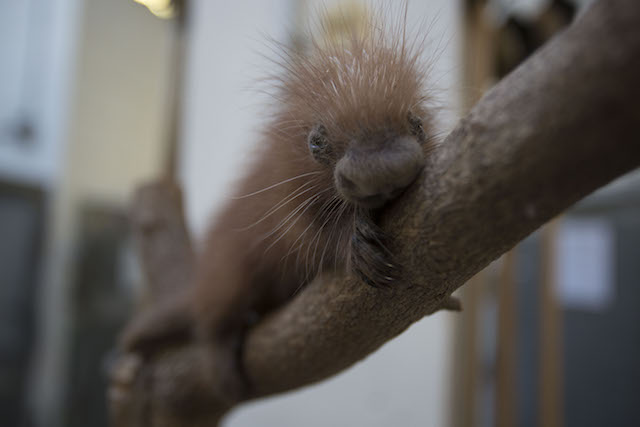 The new porcupette. (Photo by Roshan Patel, Smithsonian’s National Zoo)
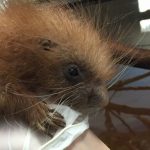
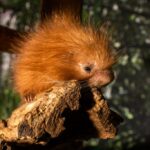
It’s belly button lint! It’s a grill cleaning brush! Nope, it’s the National Zoo’s new baby porcupine, and it’s here to melt your heart.
Born sometime overnight between February 22 and 23 to prehensile-tailed porcupines Bess and Clark, the youngster “seems very calm and doesn’t seem to mind if we pick him or her up,” says animal keeper Maria Montgomery.
They don’t know the animal’s gender just yet (though they expect to learn by next week), but it’s the youngest of three for Bess and Clark. The eldest, Charlotte, born in December 2015, was the first to teach D.C. that porcupette is a real word. She’s now living at Lowry Park Zoo in Tampa.
Her younger sister Chloe was born this past July. Unlike Charlotte, who enjoyed human contact, Chloe is “not very eager to be held. She is very independent,” says Montogomery.
Chloe is still on exhibit at the zoo, but will be transferred in the coming weeks to Little Rock Zoo. You can thank the Association of Zoos and Aquariums’ Species Survival Plan for Chloe’s forthcoming departure. Chloe, like giant panda Bao Bao before her, will be entrusted with the continuation of her species, which originates in South and Central America. Chloe will not, however, get the same bells and whistles as Bao Bao did.
As for Bess and Clark, because they “are living together at the moment, it’s possible they could have another baby since they breed almost right away after birth,” says Montgomery. Anything after that will be determined by the SSP.
Before Bess gave birth to Charlotte, keepers trained her to climb down and stay in a standing position using a rewards system of nuts and bananas, ultimately working their way up to putting ultrasound gel on her belly, Montgomery says. However, the plan was felled by Bess’s quills, which were too thick for the ultrasound to get a good view. So instead, trainers used a portable radiograph.
This was significant nonetheless because, while Montgomery describes Bess as friendly and food-motivated, “she doesn’t necessarily like to be touched.” Clark, on the other hand, was hand-raised by keepers and eagerly interacts with them.
The whole family is now on exhibit at the Small Mammal House.
You can learn more about Bess and Clark’s courtship here: