Rachel Kurzius
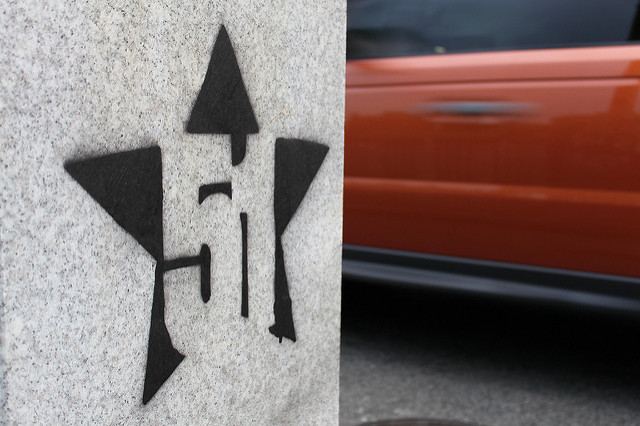 Photo by Colleen.
One million dollars … a lot of money for an individual, but still just a small sliver of Mayor Muriel Bowser’s proposed budget, which includes a line item for $952,000 towards a statehood public education campaign.
The idea is that, while residents of D.C. overwhelmingly support becoming the 51st state, most people elsewhere are unaware that the city has no voice on Capitol Hill, despite having a bigger population than two states and paying more in federal taxes than 22 states.
But the path to statehood relies on Congress, which means getting the rest of the country on board, particularly Republicans. While a statehood bill has already been introduced this term on the Hill, it has extremely long odds.
“We need to develop a message that will resonate with people out in hinterlands,” says Beverly Perry, senior advisor to the mayor. “We need a strategic consultant who has run issue-based campaigns who can guide us through how to approach the task ahead.”
That’s how the mayor’s office envisions the $952,000 being spent—a competitive bidding process for a consultant to develop and execute an educational campaign, with $96,000 toward the salary of a full-time staffer who would be the liaison between the city and the consultant.
Tomás Talamante, who handles federal affairs for the mayor’s office, says that the money is a logical extension of the work Bowser’s office has been doing toward achieving statehood.
“The first year of the plan was dedicated to local residents and our support for statehood,” he says, pointing to the mayor’s push for a ballot initiative in November, which more than 85 percent of voters supported at the polls. “The year two plan is looking elsewhere, across the country, to educate more Americans about the plight of our residents.”
Perry adds that, once people of any political stripe learn about D.C.’s plight, they’re generally outraged. She says that when she and Bowser went to the Republican National Convention, “we talked to many, many Republicans, including the chair of the Ohio state delegation, and they were really just in disbelief when we told them we have no representation in the Senate and no vote in the House,” she says. “They were like, ‘Well, how can that be?’ and that’s our question and that’s what we just want to change.”
They could see the campaign working in a number of different ways: message development, printed materials, media buys in targeted states, having a display at D.C.’s convention center to reach the thousands of annual visitors there, and more.
“We’re also looking at new media—is there an app that can be developed?” says Talamante.
While the mayor’s office might have some ideas for what could work, “we’ll leave this to a consultant,” Perry says of the specifics.
A million dollars is “not a lot of money to do what we’re trying to accomplish,” says D.C. Shadow Senator Michael D. Brown. “All I can tell you that a friend of mine named Hillary Clinton spent more than a billion dollars on a nationwide campaign, and she lost, so the money doesn’t really knock you over.”
Brown says that he would have preferred that the money for the education campaign go to the shadow delegation, which is currently unpaid.
“The voters of District of Columbia have already elected three lobbyists to do this,” he says. “You would think [Bowser] might put a little faith in the voters and allow us to do our job. It’s not efficacious to walk up to Capitol Hill and say ‘Hi, I’m Mike and I’m the volunteer senator for the District of Columbia.'”
He says that he told Bowser at the Emancipation Breakfast that “you’re not giving a million towards statehood, you’re giving a million dollars to your own office.”
But Perry, Bowser’s senior adviser, says that “the issue is that I think a lot of people would want the money to be paid to them, but I assure you, it’s going to come together.”
Budget season has just begun, and Bowser’s proposal now goes to the D.C. Council. But the mayor’s team is optimistic about how the money toward statehood will fare with councilmembers. “This request falls in line with what the city called for,” says Talamante. “The mayor is being responsive to the 86 percent of voters who overwhelmingly want statehood.”
The main goal at this point, Perry says, is for the statehood movement to develop prominent Republican allies. She likens it to the reality television competition The Voice.
“We’ve been singing this song for the long time,” Perry says. “When you see the TV show The Voice, the goal is to turn a chair, any chair. Our goal is to turn the chair of a Republican.”